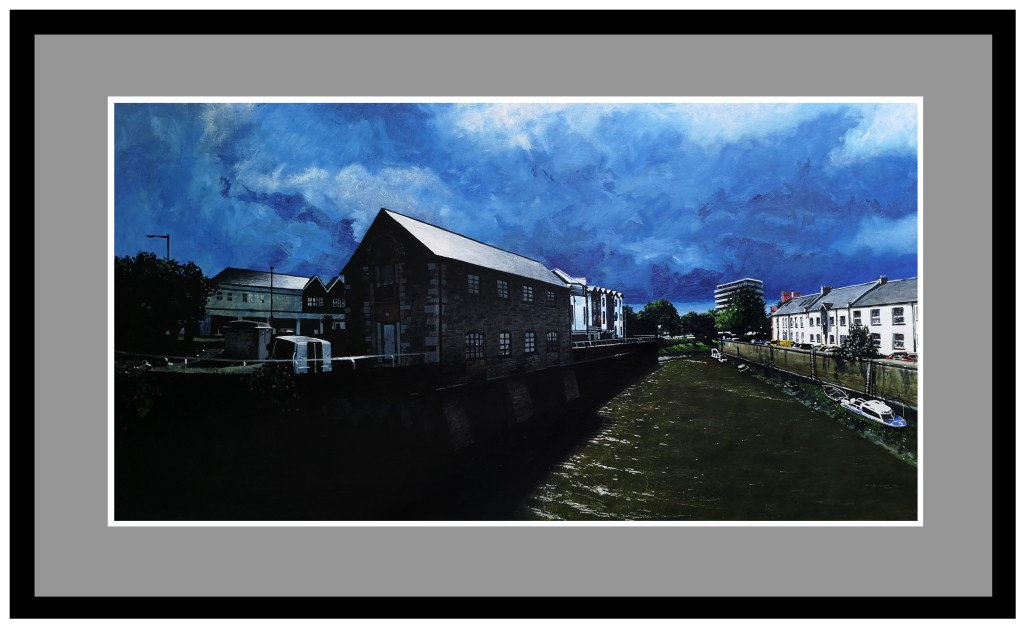
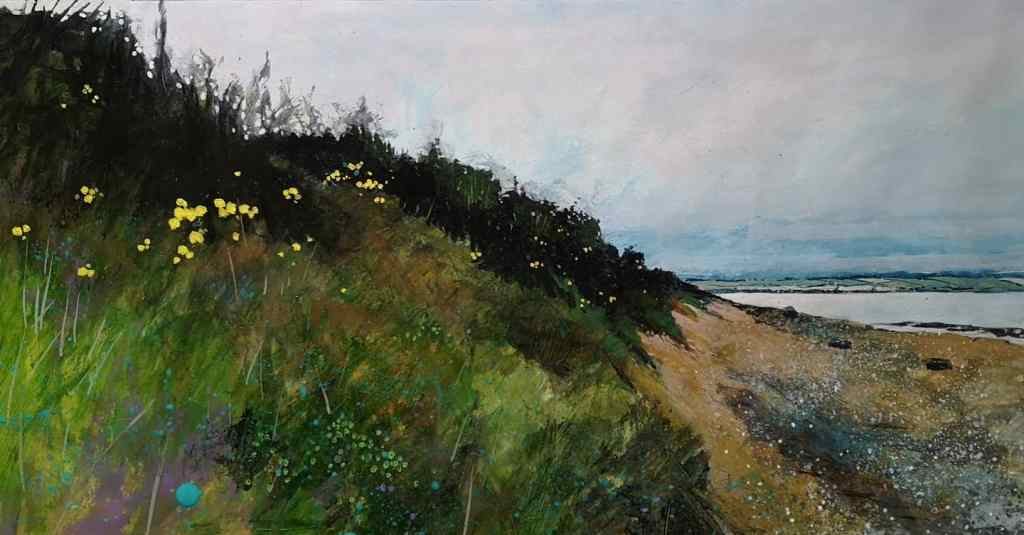
In a place called Douma.

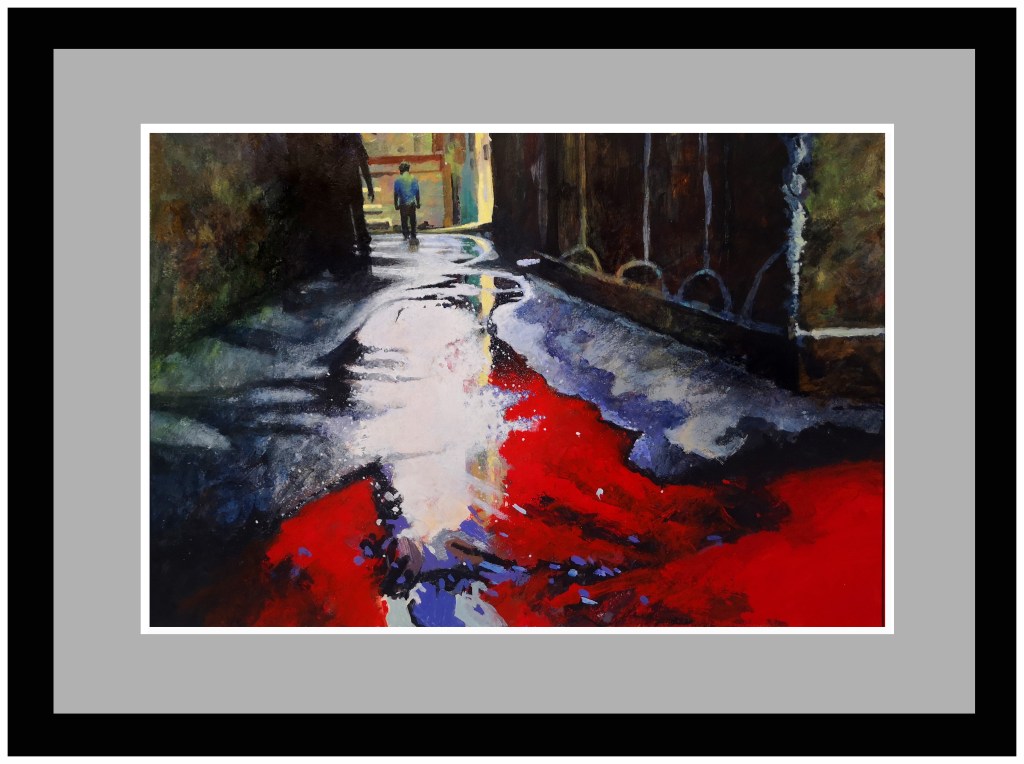
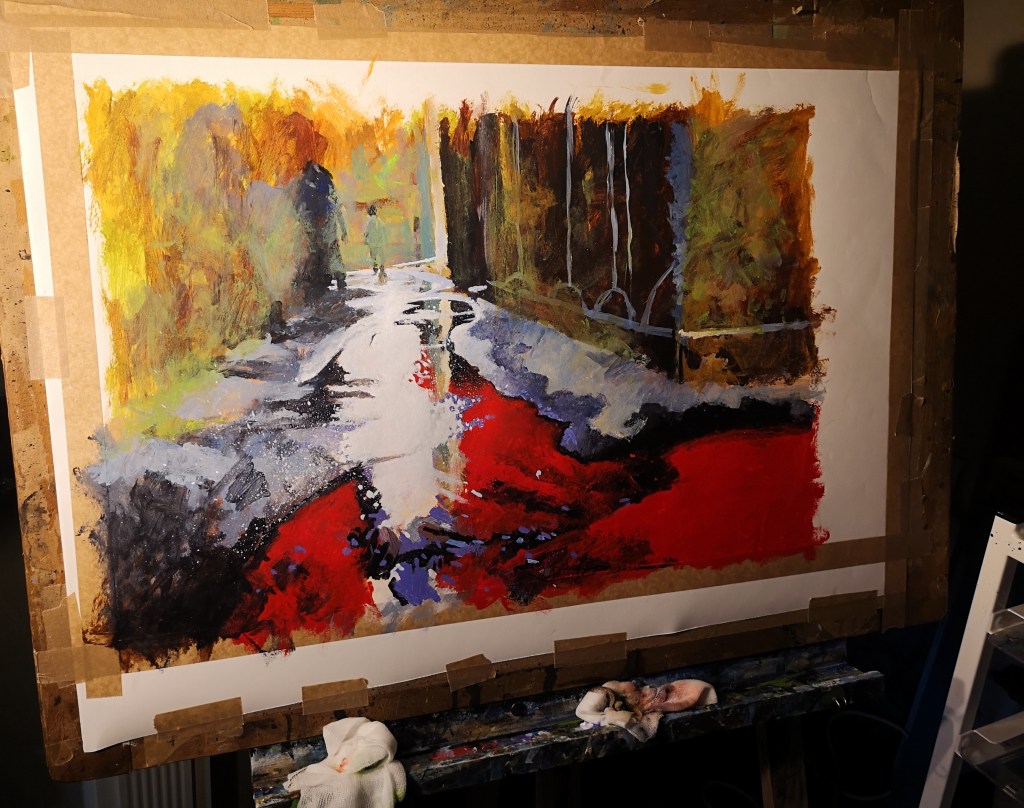
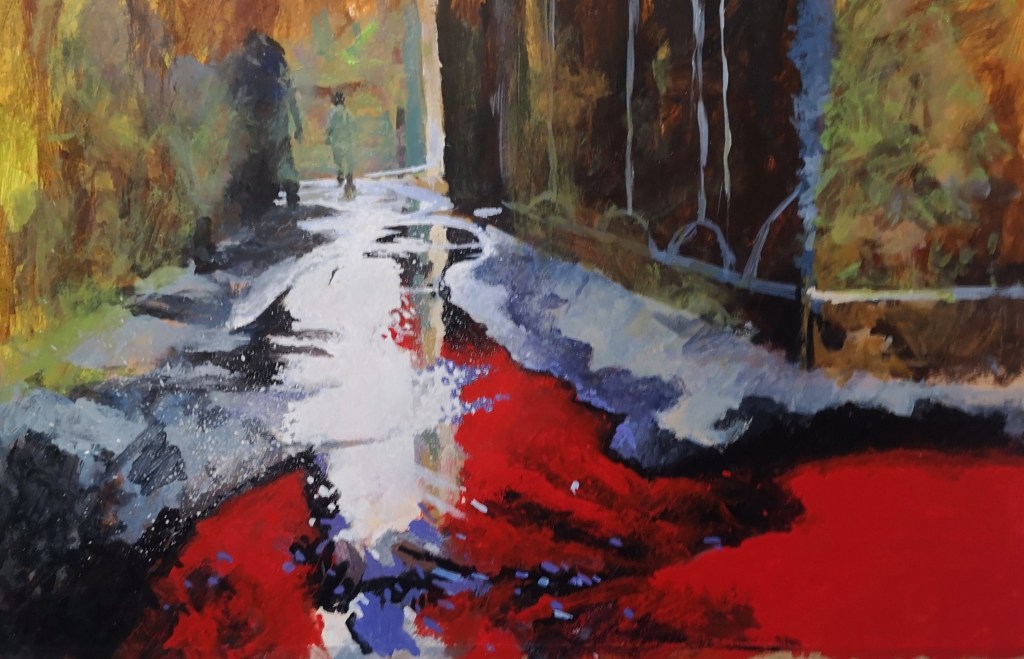
A painting entitled In a place called Douma, 500 x 350mm acrylic on paper. Painted from an image from the Free Syria Media Hub on Twitter. The title of the picture post was “Real Rivers of blood do flow deep and fast in a place called Douma”. I would photo credit this but sadly couldn’t read the lettering.

Ghosts from photographs past
Remind us of times that couldn’t last
They’re reflections of our golden years
Our hopes, aspirations and growing fears

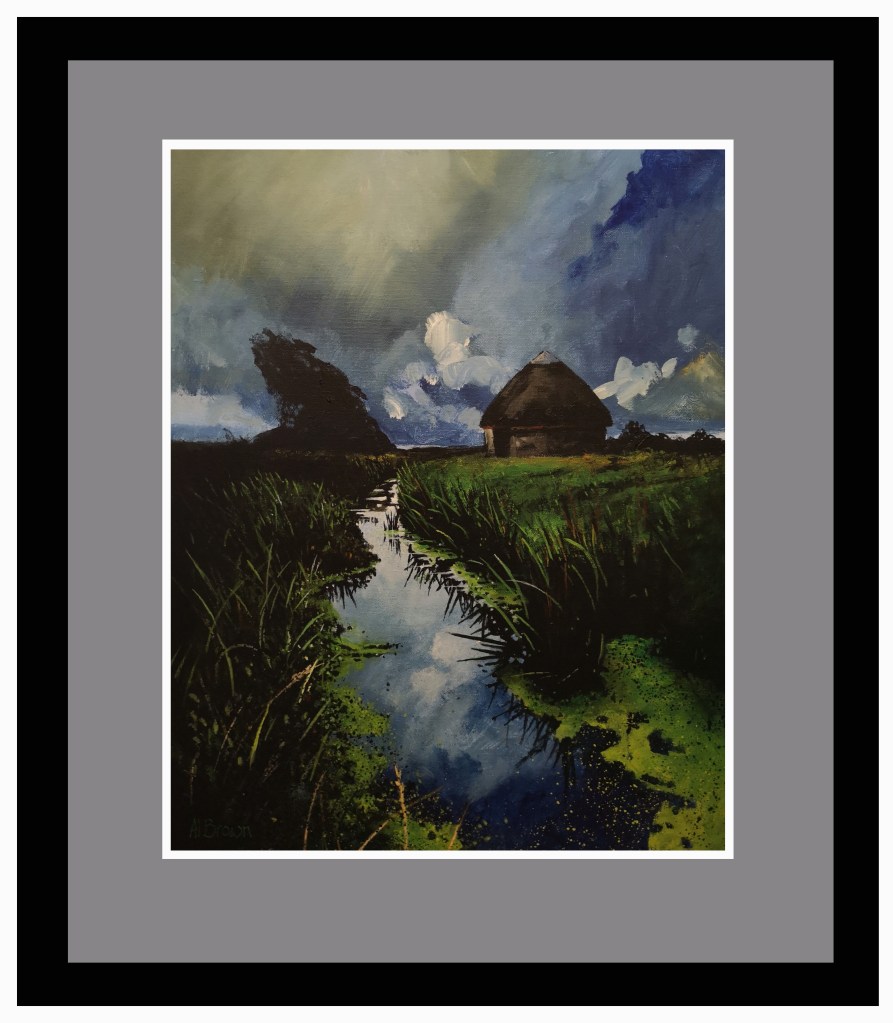
Linhay on the marsh revisited.

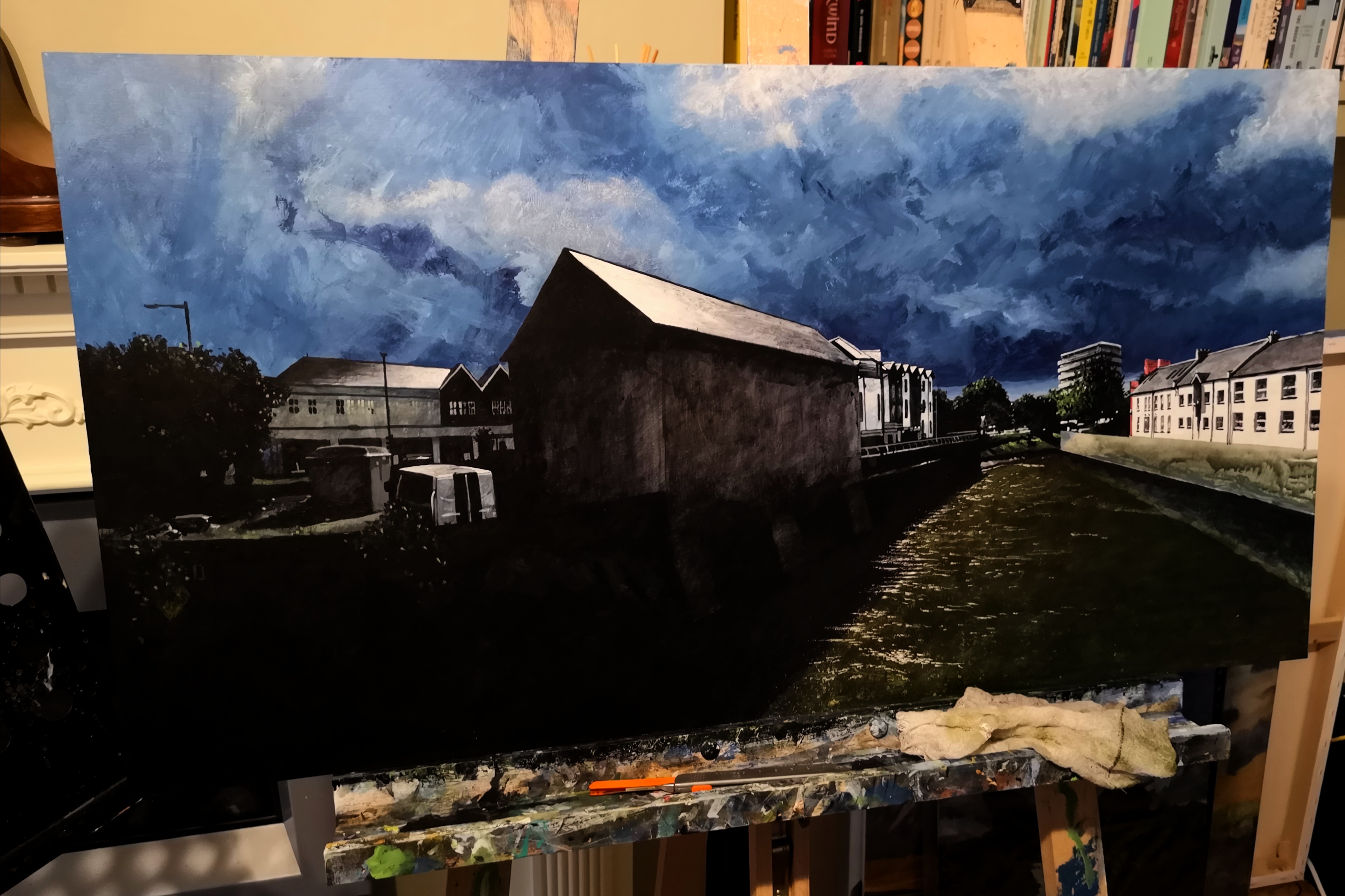
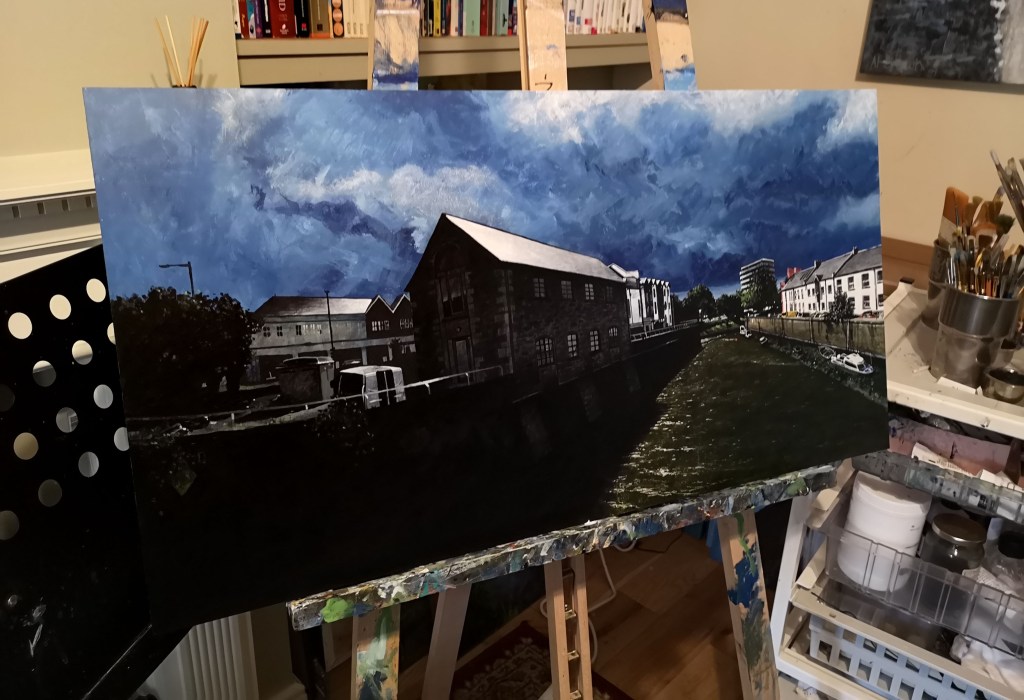
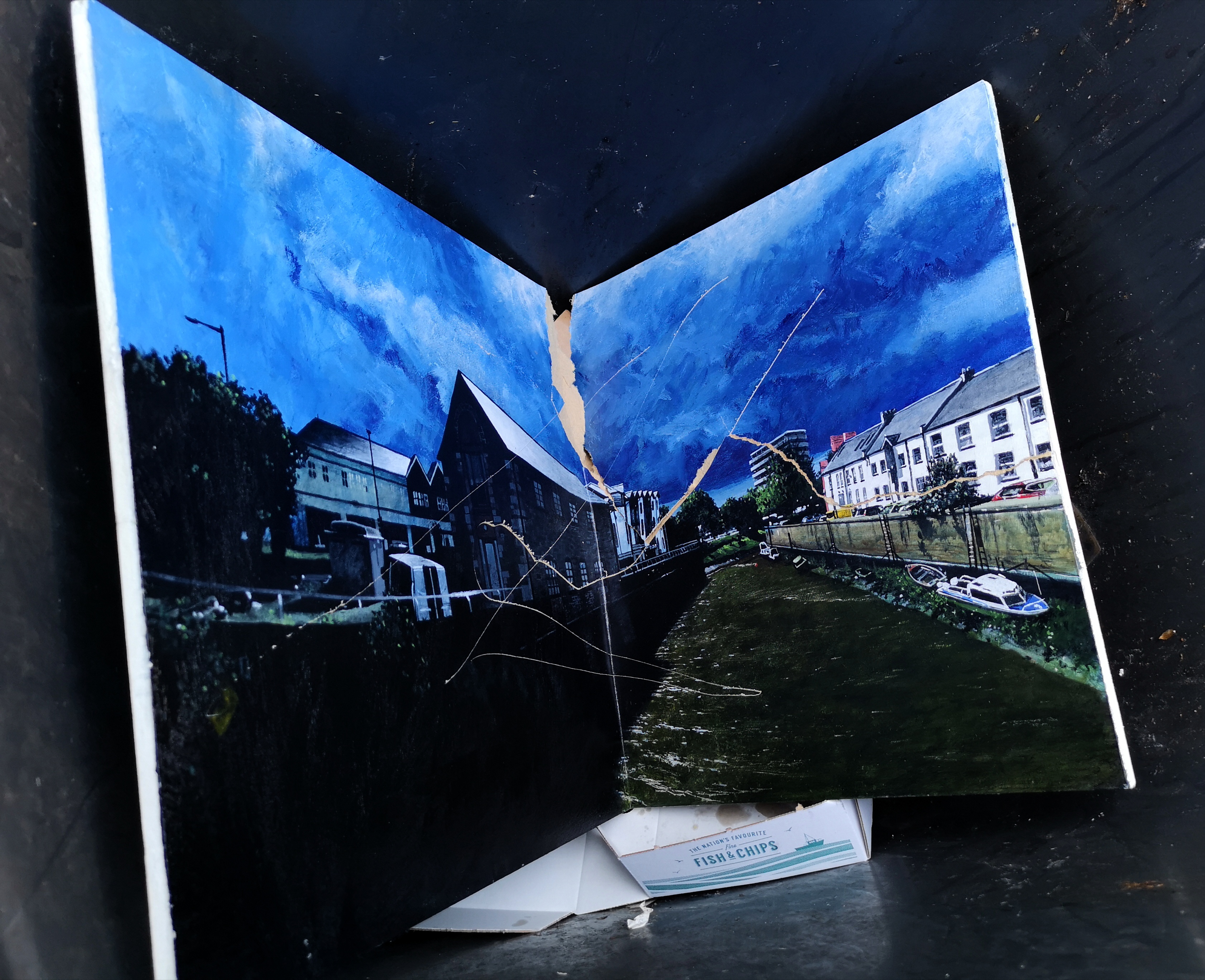
What to do on a Sunday with a spare canvas and some hangover enthusiasm.Β  Go out and paint one of my favourite scenes on the Braunton Marsh.Β  Acrylic on 16 x 20″ canvas.
Β Β  This is what the Explore Braunton website says.Β  No two linhays are the same, although most are of square or rectangular shape.Β  Some have become dilapidated but around 30 still stand today.Β The one which attracts the most attention is the round linhay, a grade II listed building on the edge of the inner marsh road, which has been thatched and provides endless photographic or even painting opportunities.
I visit this site many times throughout the year and each time it’s slightly different. Sometimes the water in the drain is crystal clear full of sticklebacks and at others fully of weed and cowslip plants. Local swans often glide past along with large dragon and neon blue damsel flies. In the winter it’s always quite bleak here hence the wind blown trees, all in all I prefer the spring/summer seasons.
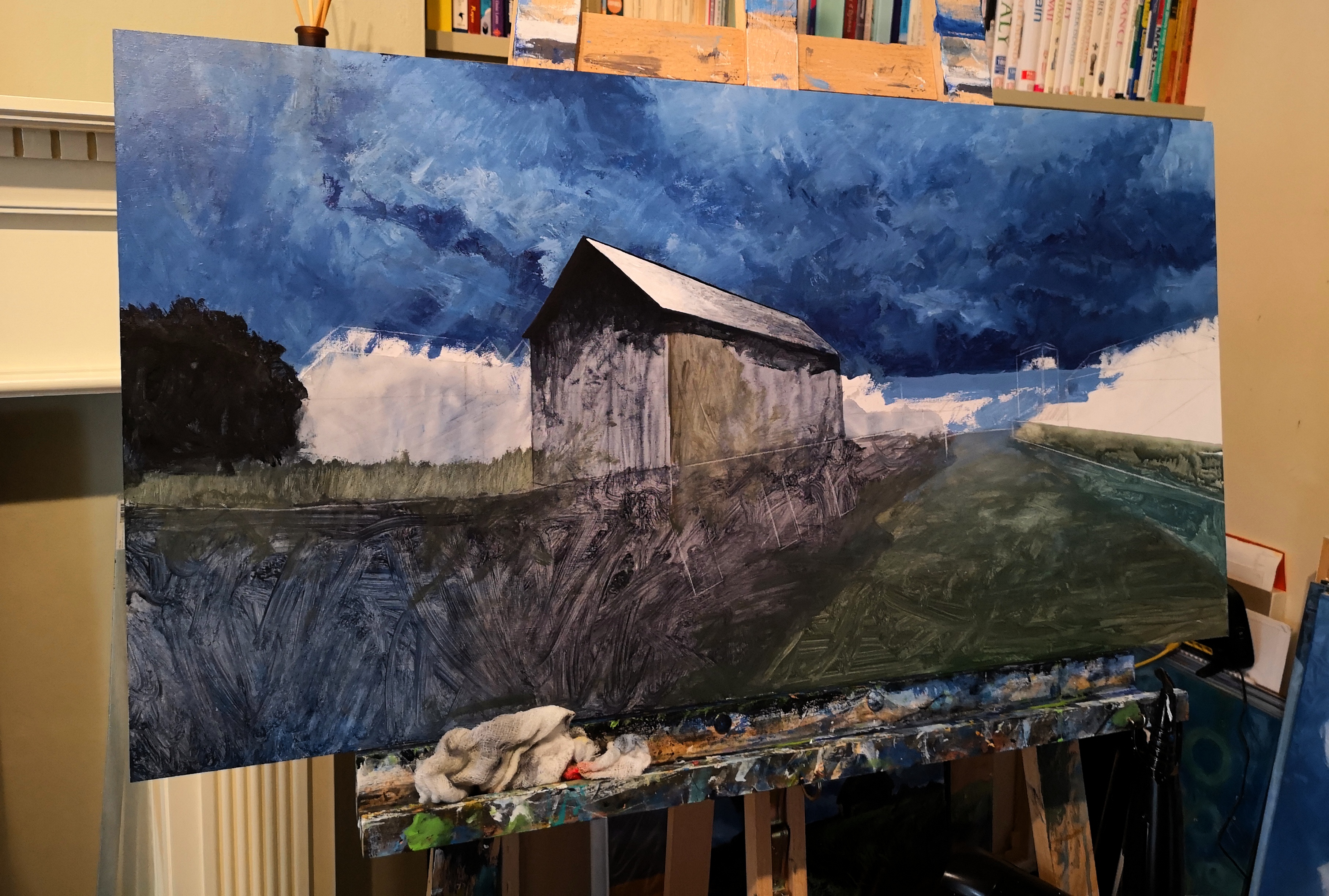
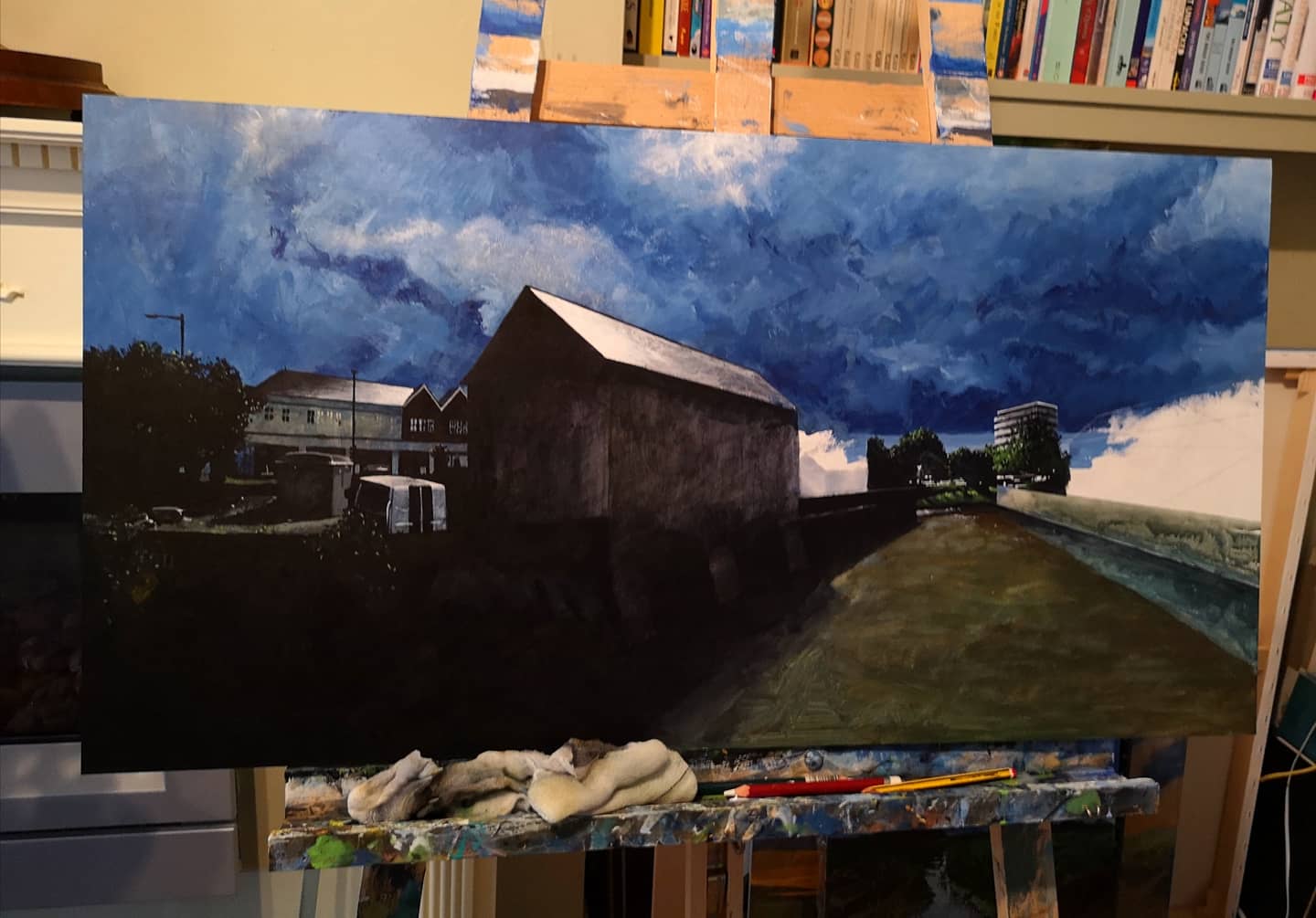
Below are two pictures I’ve photoshopped from a quick cycle around the marsh today.

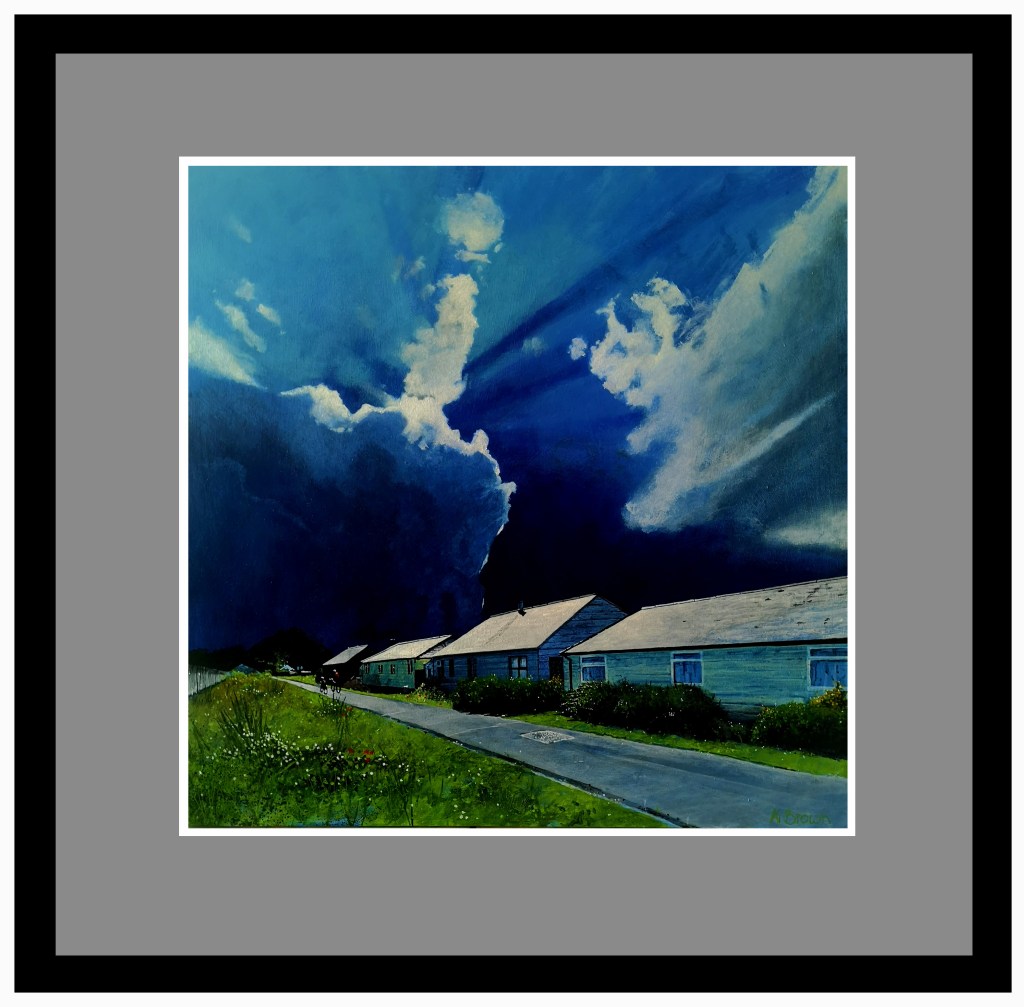
Cycling into the storm.

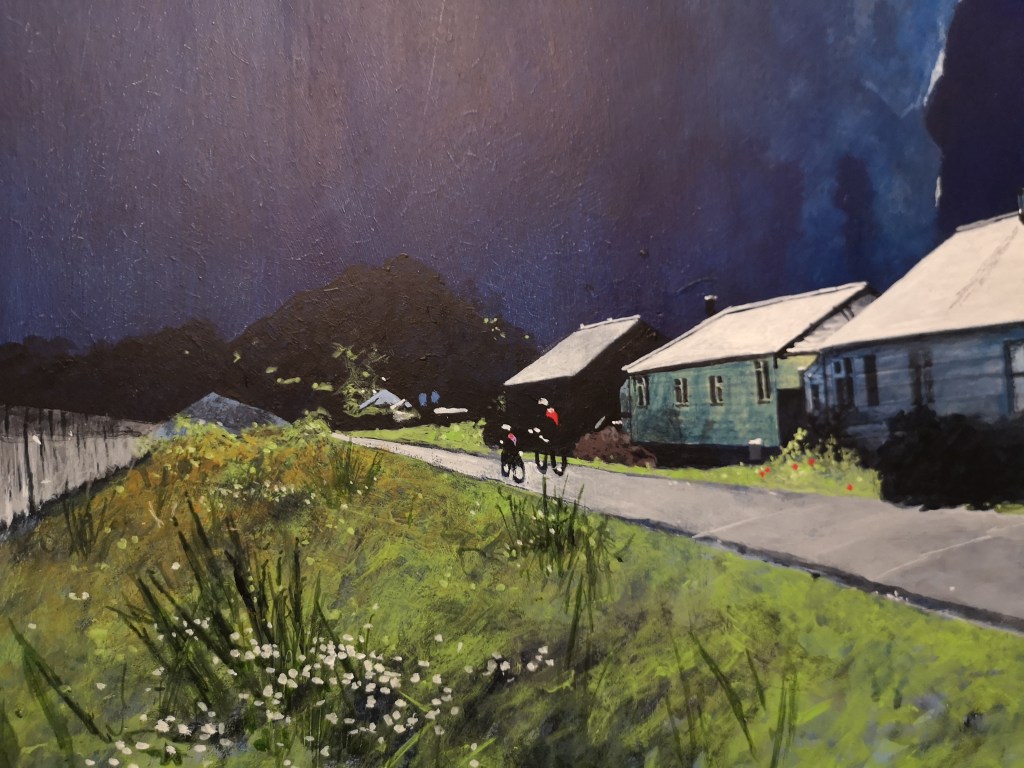
Moving swiftly on a painting entitled ‘Cycling into the storm’ 600 x 600mm acrylic on panel. This painting is of the many beach huts that line the Tarka Trail at Instow. I was cycling on the Trail near the Cricket Club when a massive summer storm swept up the River Torridge towards me, quickly I took an image on my phone and this was the result. I remember the cyclist speeding by trying to get to shelter before the rain came. On the left you can see the secure boundary fence of the Instow Arm Camp and just out of frame to the right the old railway crossroad that leads down the Instow Beach.

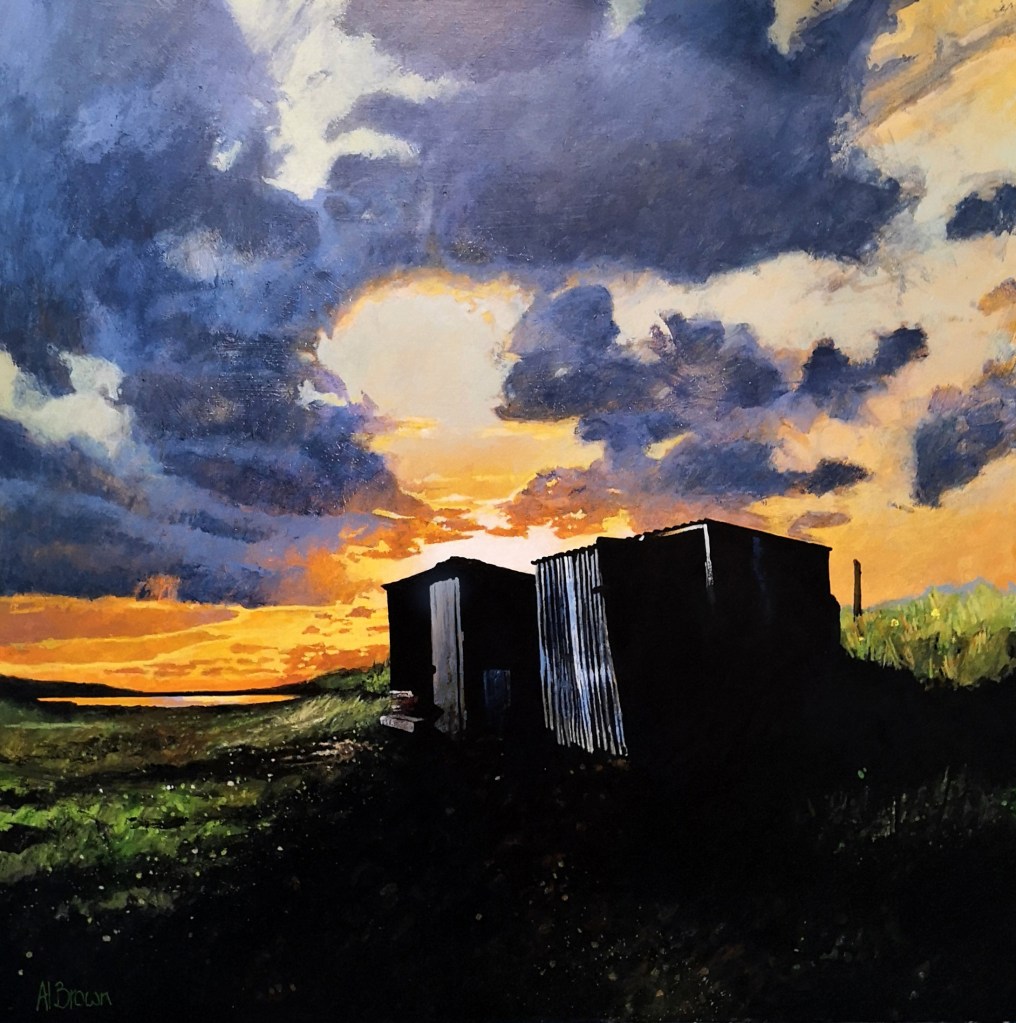
Fishermen’s Huts at Crow.

I was taken by an image on Facebook of a couple of old fisherman’s huts at Crow Point in North Devon and decided to sketch them in leu of a painting. I made my way to the White House at Crow and walked left along the thorn ridden breakwater; this is now the only way to get to these huts as part of the inner wall has collapsed. I arrived and marvelled at their rustic charm, rusty orange corrugated iron, weather bleached wooden doors and crude cobbles which remained from years ago.
Quickly I took a series of photographs and made a few reference sketches eventually the dark clouds forebode and soon it began to rain. Luckily one of the huts wasn’t locked and I weathered out the storm in it’s solitude loving that sound of rain on iron. The smells of the estuary mud and seawater filled the air as I made my way back slipping on the mud and pebbles.
After a little photoshopping, which I use for preliminary planning, I came up with this composition of the old huts.  It’s often quite difficult to photograph paintings and the true colours and softness of the paint are missed, but on the whole I quite like this painting! These huts are placed at the crook of Horsey Island on the Braunton Marsh just where the River Caen (Braunton Canal) meets the River Taw. In the painting you can see The Taw in the background. Recently the inner tide Sea defences have failed and now Horsey Island has returned to the brackish muds of the Estuary.

600 x 600mm acrylic on gesso panel. Al

Evening Primrose at Crow.

I attended an interesting walk and talk arranged by the Braunton Countryside Centre about the Second World War and the Burrows. I sketched a quick picture of the waterside as I’ve never seen so many Evening Primrose plants in flower. Quite an unusual light this morning quite humid, it reminded me of that Monsoon type light. I was amazed at the amount of Evening Primrose in bloom, the flowers looked even brighter against the dark sky.
This morning there was an enjoyable walk arranged by the Braunton Countryside Center it was about the Burrows and it’s World War Two usage for the D Day Landings. Many Americans were trained here for beach assault the person who lead the walk and talk was by Richard Bass a WW2 Historian from the Assault Training Centre Friends. If you can get onto one of these walks it’s well worth the effort. Al

https://assaulttrainingcenterfriends.co.uk/

Braunton Countryside Centre are on both Facebook and the net!

If you’re not local then leg it!

I was quite taken by this surf sticker infested sign in a lay-by overlooking Saunton Sands Beach. I’ve decided to paint this sign as a challenge and nod to all the people who have had a hand in it’s creation. From these lay-bys you get a magnificent view out over Saunton Sands, the Burrows and all the way to Westward Ho and beyond. I’ve entitled this composition ‘If you’re not local then leg it!‘ In days gone by surfers used to stake claims on local breaks with words such as ‘locals only’ etc. Acrylic on gesso panel 760 x 600mm.

The Culbone Stone.

We spent an enjoyable day visiting the Somerset side of the Exmoor National Park spotting deer and searching out cream tea rooms. We visited Selworthy, it’s Beacon and the Periwinkle Tearooms, then travelled on to the The Horner Tea Gardens for more indulgence. Full of cream and jam we decided to visit the Culbone Stone on our return home.
Just off the A39 between Oare and Porlock there is a small junction which leads to a permissive path leading to the Culbone Stone. This mediaeval stone which has a Christian wheeled ring cross carved into it by and early Christian community about 1,200 years ago. It is approximately 3′ high and 20″ wide, and it’s style suggests it dates from perhaps the 6th or 7th century. This stone was discovered on it’s side at about 1939 and then placed upright where it was found, it is thought to be part of a long Neolithic stone row erected 3000 years ago which resides close by in the same wood. The earie wood, it’s ghostly trees and hanging moss suggests magical and mystical properties and has been suggested that St Beuno may have preached there.
We searched for the stone row for some time but sadly gave up stumbling around through brambles, tics and dense bracken. Below the exmoorher.co.uk link gives a much better location for this row.

https://www.exmoor-nationalpark.gov.uk/about-us/press-room/press-room/news-2013/a-chance-to-visit-the-culbone-stone

https://www.exmoorher.co.uk/Monument/MSO7893