In search of the elusive Bideford Black Pigment otherwise known as Biddie Black. Running alongside seams of anthracite across North Devon is a black clay-like material that was mined for 200 years in Bideford for its uses as a strong black pigment. The unique ‘Mineral Black’, or ‘Biddiblack’ as it was known, was commercially produced for applications in the boat building industry, for colouring rubber products, for camouflage on tanks in WWII and was even bought by Max Factor for the production of mascara. The mines were closed in 1968 when the production of cheaper oil-based blacks and the depletion of the seam made the operation financially unviable, but many locals still remember the ‘Paint Mines’ and have tales to tell of using the paint or going into the now defunct mine shafts. Today it’s revered by artists who love it’s inky black non reflective properties. It first has to be dried, ground and then mixed with a medium such as PVA or Gum Arabic. Looking forward to making my own now and seeing what images I can produce. AL.
ps most of the information was from a website called The story of Bideford Black.

 I have just completed four highly enjoyable days at this year’s Hatherleigh Festival and parted with a few paintings. More importantly I’ve met new people, artists and musicians. I’m hoping that the contacts I’ve made here will help further my artistic endeavours in the future. There are so many creative and enthusiastic people here you can see why the town is known as a hub of creativity. I’ve received such positive feedback about my work my confidence can only grow, so if you’ve never visited this wonderful town then do so you’re in for a great surprise. I’d just like to say thanks to Josie, Mick and Alan for your generosity. Al


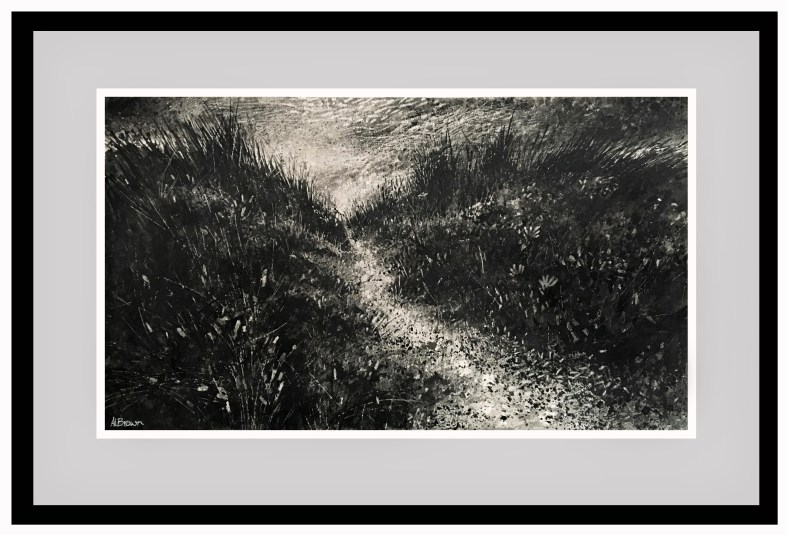 Another Bideford Black painting 610 x 350mm on Bockingford paper. This was from an idea by Adrian Beasley Imaging who suggested copying one of his landscape photographs for an upcoming joint exhibition at a local venue. We are both exhibiting black & white landscapes and a comparisonal piece will be interesting. Just a few minor adjustments in the cold light of day but this is it. See you on North Devon Art Trek. Al
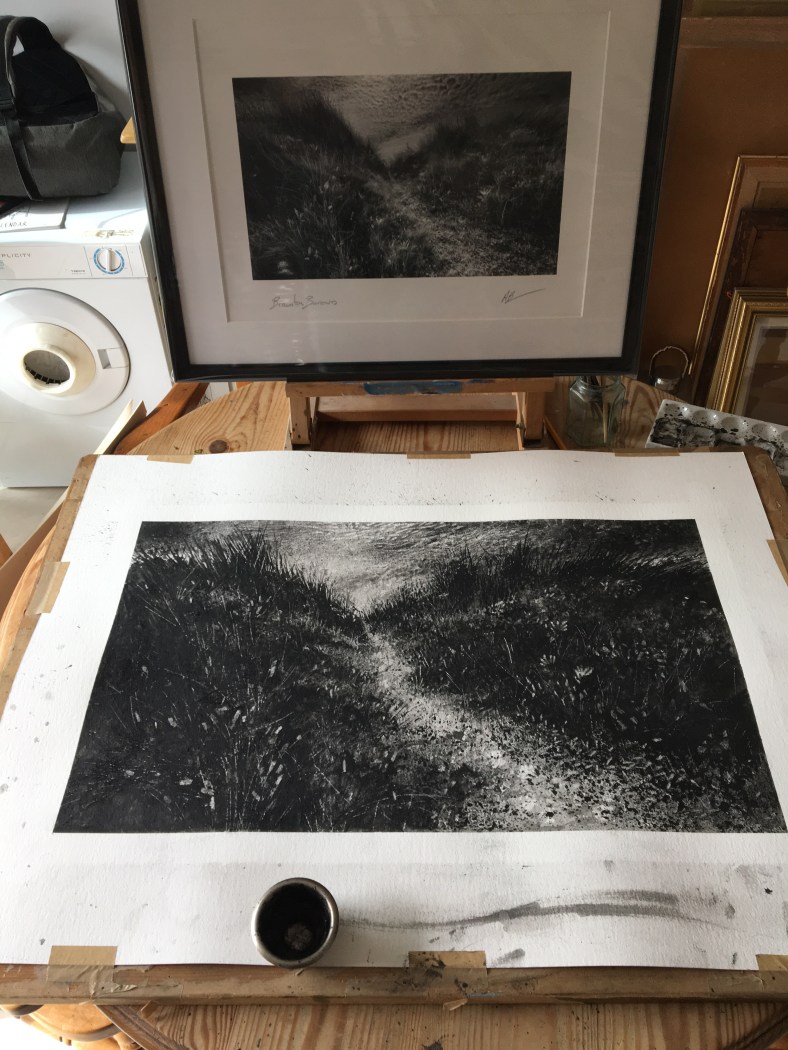 The original AB photographic image above and my afternoon’s work beneath. I’ve taped the outside so that when removed it gives a kind of photographic edge to my painting. Al
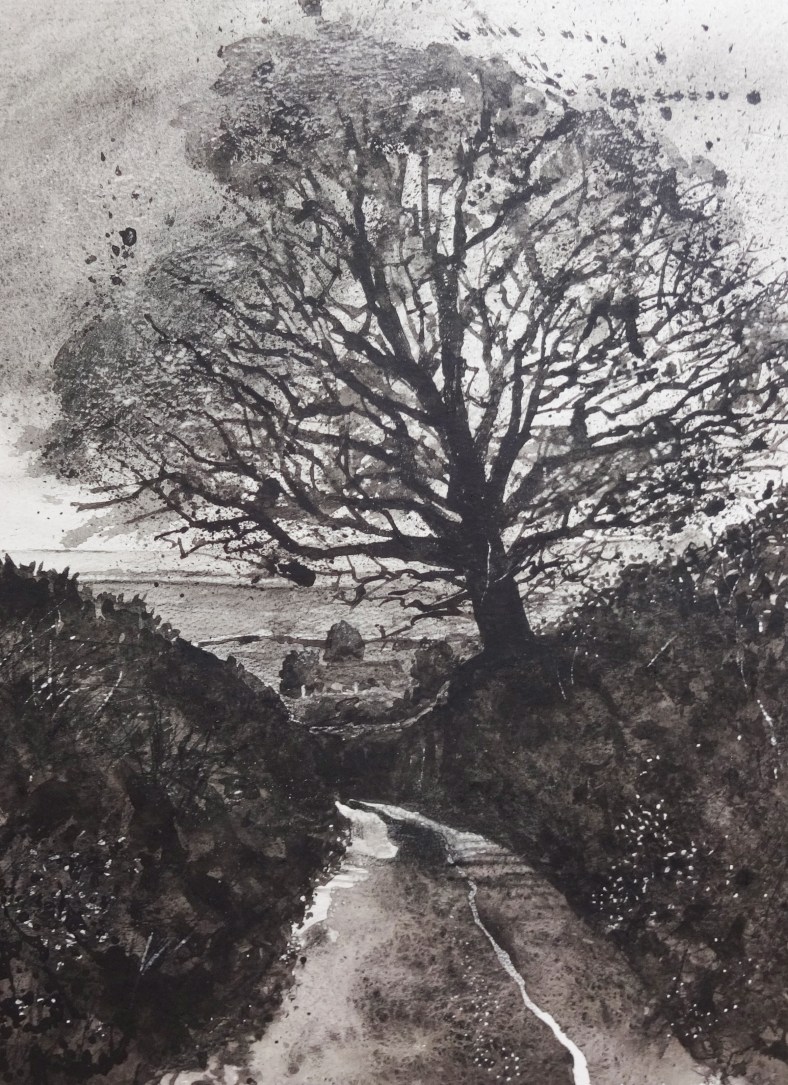
 Last Bideford Black painting for a while. This is of the famous Seafield House at Westward Ho in North Devon. Always love looking at this building with its decay and mystery. Recently a local businessman has purchased this so it will be interesting to see what happens.




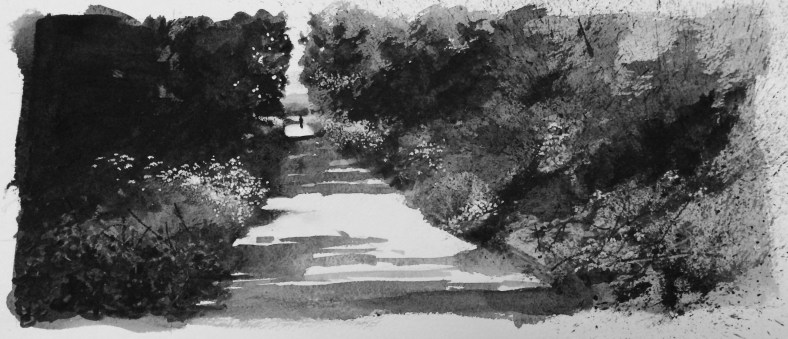 A quick study of the Tarka Trail near Chivenor in North Devon England. Painted using my own sourced and prepared Bideford Black pigment. Loved the dark shadow and highlighted cow parsley on the left of the trail. Still trying to free up my paintwork. Al


 Al Brown Artist.