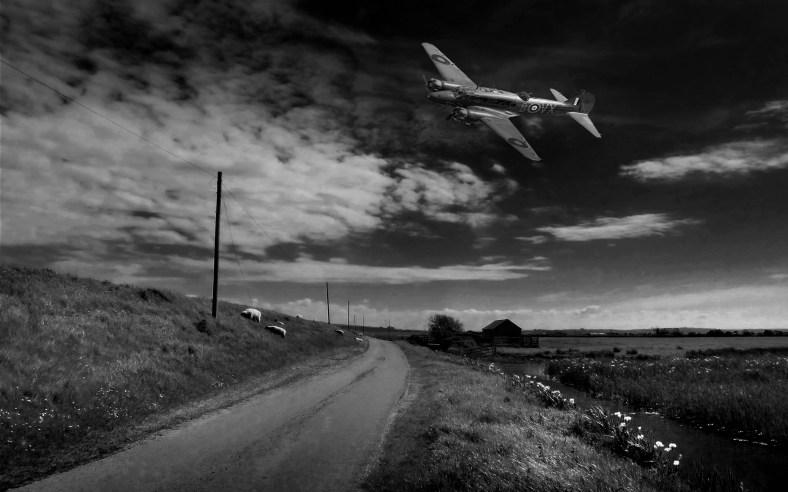
 Another image in this WW2 photo montage series of planes flying from RAF Chivenor. This is what it may have looked like to see an Avro Anson flying low over the flood barrier heading back to RAF Chivenor, part of Coastal Command 1941.
My mother (who lived as a child in the cottage at Little Raleigh, Roborough, Barnstaple, North Devon) remembers an aircraft crashing into the wall opposite to where she lived, near to where the North Devon District Hospital now stands. Her brother Terrance visited the site the morning after and retrieved some of the clear perspex canopy. He then made rings inlaid with paste diamonds for some of the local girls in Derby. The account in now available from Robert Palmer MA, Titled The Last Flight of Avro Anson N9817. http://www.BritishMilitaryHistory.co.uk. January 15th 1940: Avro Anson 652 reg K6271. While on a night training mission, the crew was forced to attempt an emergency landing in a Barnstaple field for an unknown reason. At the time of the accident, the visibility was poor. The crew fate remains unknown. PLANE CRASH NEAR BARNSTAPLE Albert Percival Snelling 45, Pilot Killed: Engineer Rescued. MACHINE BURNT OUT: RICKS DESTROYED. The pilot lost his life and the other occupant was seriously injured when a twin engine aeroplane crashed which had for some considerable time been at Barnstaple and North Devon Aerodrome. Bureau Of Aircraft Accidents Archive.May 15th 1941: Avro Anson N9817. Crashes at Roborough, North Devon. Two pilots were killed as was an unfortunate road worker. The crash was documented as youthful exuberance. The had been performing a falling leaf manoeuvre and had sadly stalled their aircraft.August 27th 1941: A twin engine aircraft (probably an Avro Anson ) was reported “missing” in northern Cornwall, perhaps at Harland ; This plane was from Chivenor.July 4th 1958: VV362 Avro Anson, After taxiing in at RAF Chivenor, Devon, an ambulance was reversed in front of it to transfer a patient from the Anson. The pilot increased rpm to prevent oiling the plugs but the aircraft moved forward and struck the ambulance. The fuselage was twisted and the tail damaged. There were no injuries.October 17th 1960: WD451, Following an uneventful training mission from RAF St Athan, the crew mistakenly belly landed at RAF Chivenor. The aircraft slid for several yards before coming to rest and was damaged beyond repair. Both pilots were unhurt. The probable cause was thought to be that the crew mistakenly raised the landing gear on approach instead of lowering the flaps.
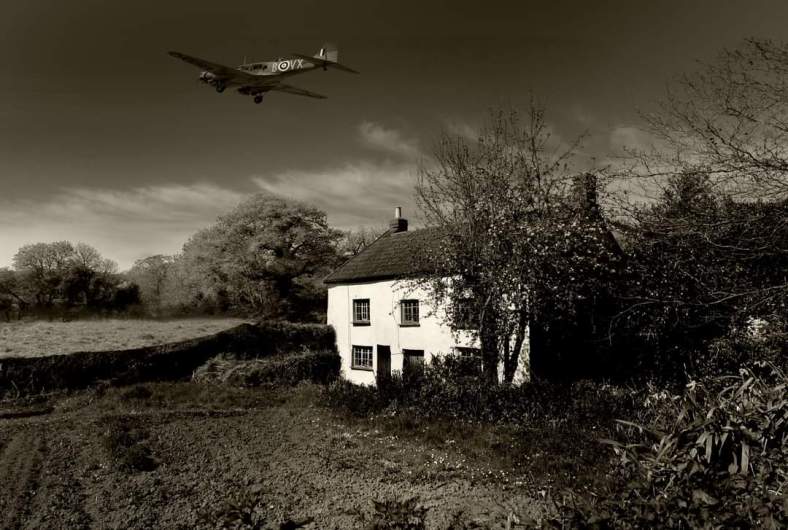


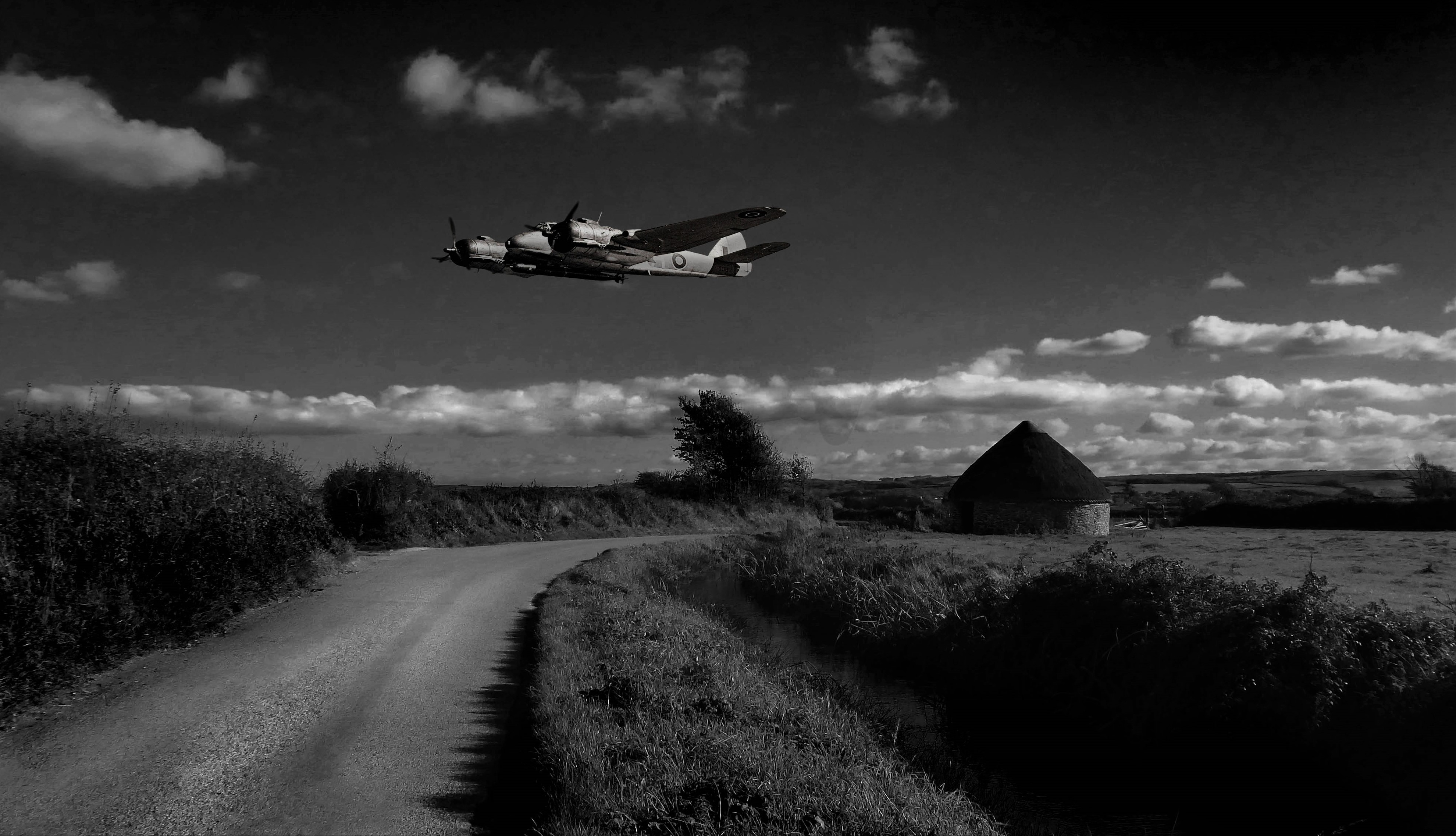


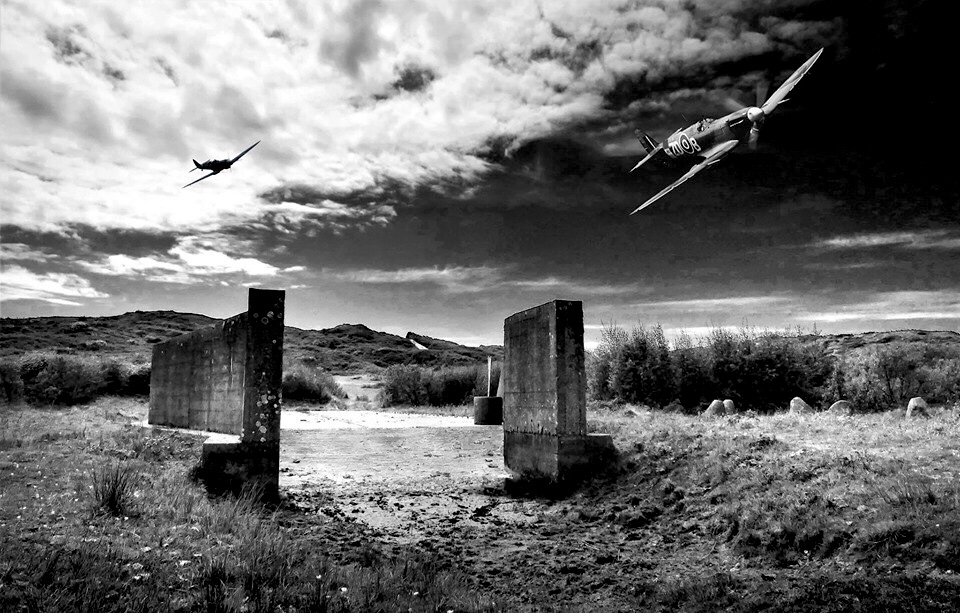
 Hawker Hurricane over the Linhay on the Marsh!
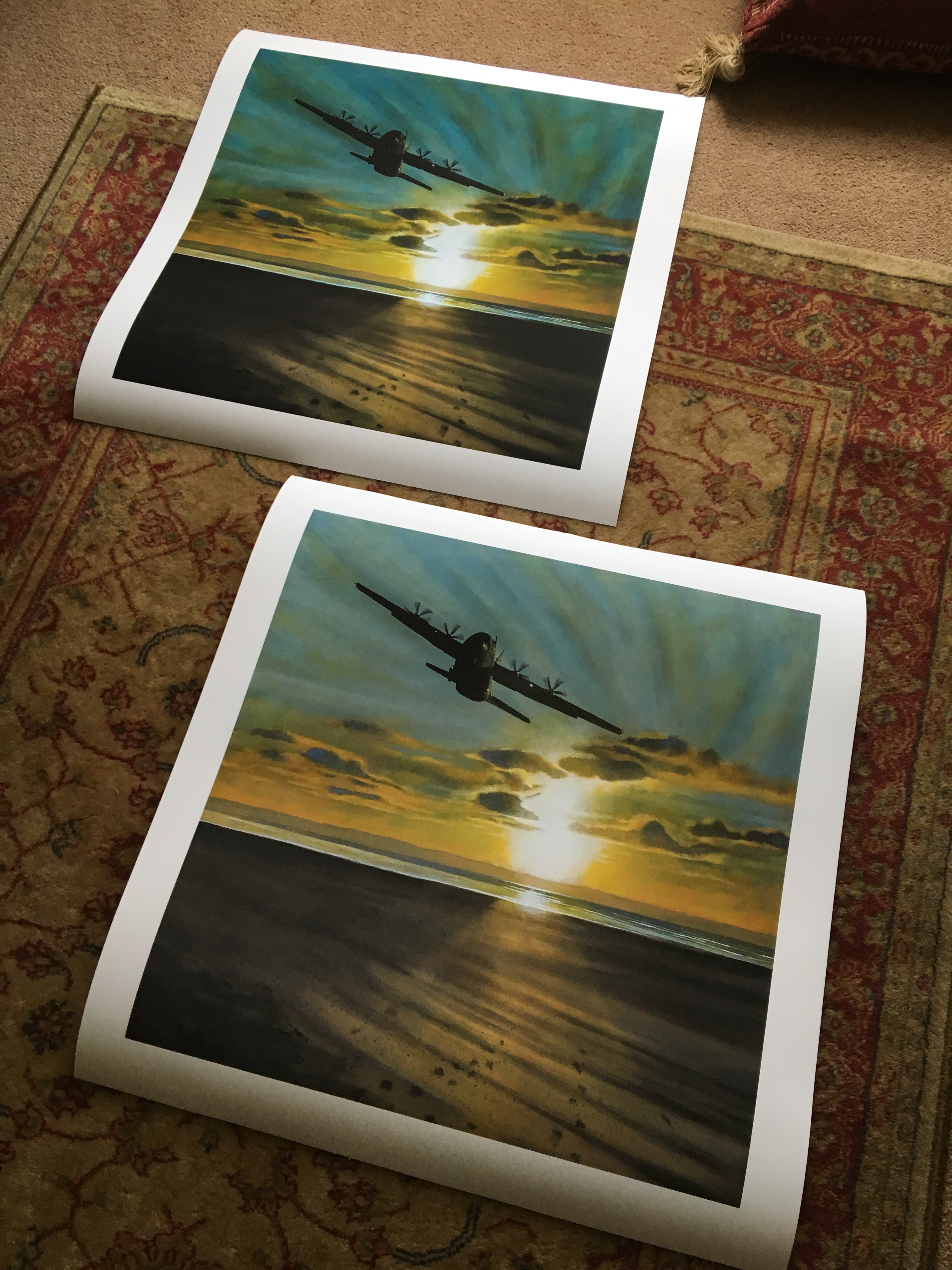 Many thanks to Adrian Beasley Imaging for these initial prints of one my paintings Hercules over Saunton, painted earlier in the year. Hercules practicing landing and take offs on Saunton Beach in North Devon.
 Another Bideford Black painting 610 x 350mm on Bockingford paper. This was from an idea by Adrian Beasley Imaging who suggested copying one of his landscape photographs for an upcoming joint exhibition at a local venue. We are both exhibiting black & white landscapes and a comparisonal piece will be interesting. Just a few minor adjustments in the cold light of day but this is it. See you on North Devon Art Trek. Al
 The original AB photographic image above and my afternoon’s work beneath. I’ve taped the outside so that when removed it gives a kind of photographic edge to my painting. Al
 Last Bideford Black painting for a while. This is of the famous Seafield House at Westward Ho in North Devon. Always love looking at this building with its decay and mystery. Recently a local businessman has purchased this so it will be interesting to see what happens.
  I’m very pleased to have a mention in The Gazette this week with regard to the North Devon Art Trek 2019. Please check out their site and see what North Devon has to offer. I was so pleased with last year’s open studio weeks that I shall be doing the same this year. Al
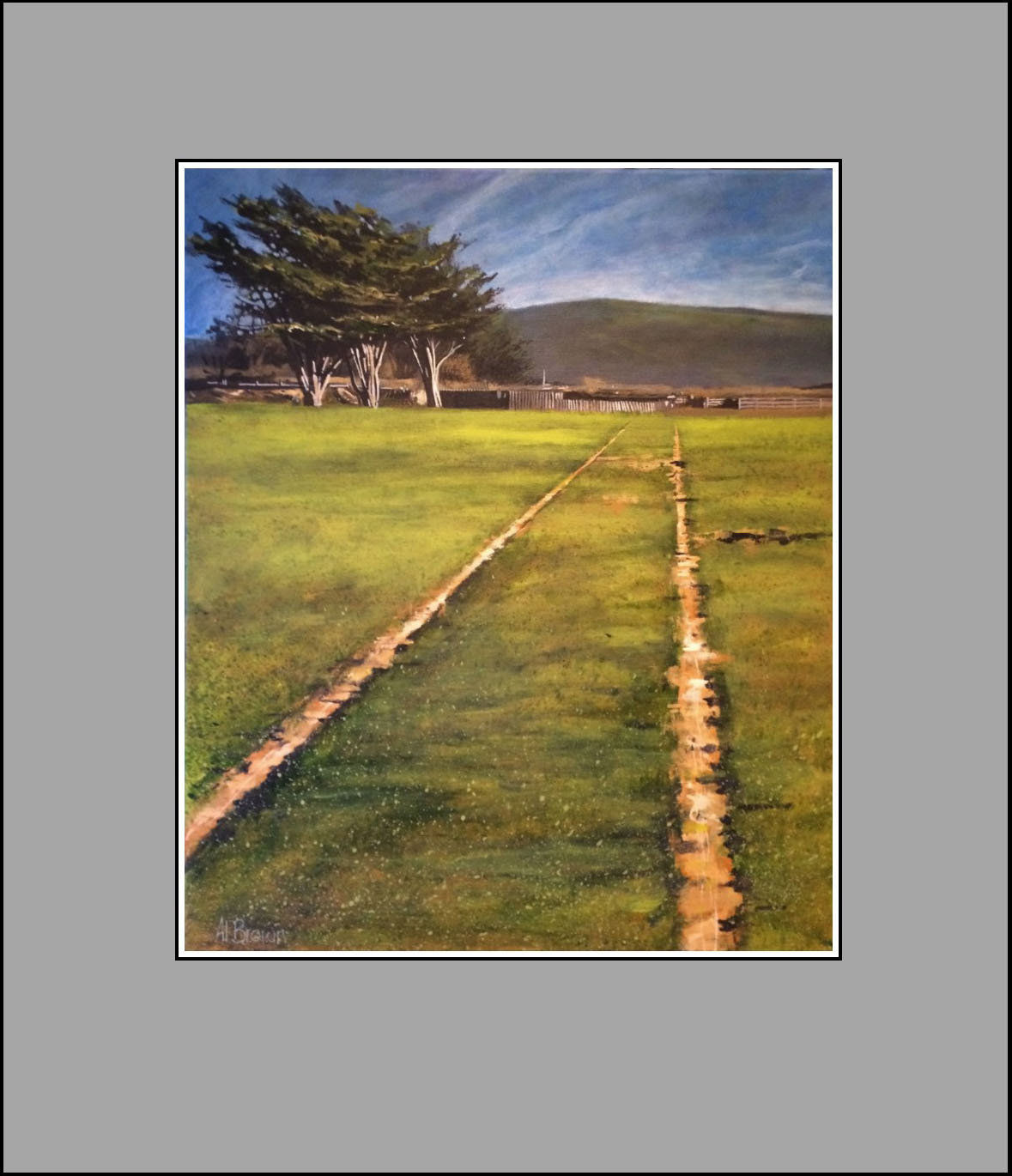 On a cold wet Sunday it’s time to say in and paint something from the summer to warm me up. This is an acrylic on canvas painting 500mm x 600mm of the trail that leads from the wonderful Croyde Beach, in North Devon. The walk eventually leads to the famous local Thatch, a popular pub in the village of Croyde. Al


 Al Brown Artist.