PIGMENTS FROM ROCK TO BLACK

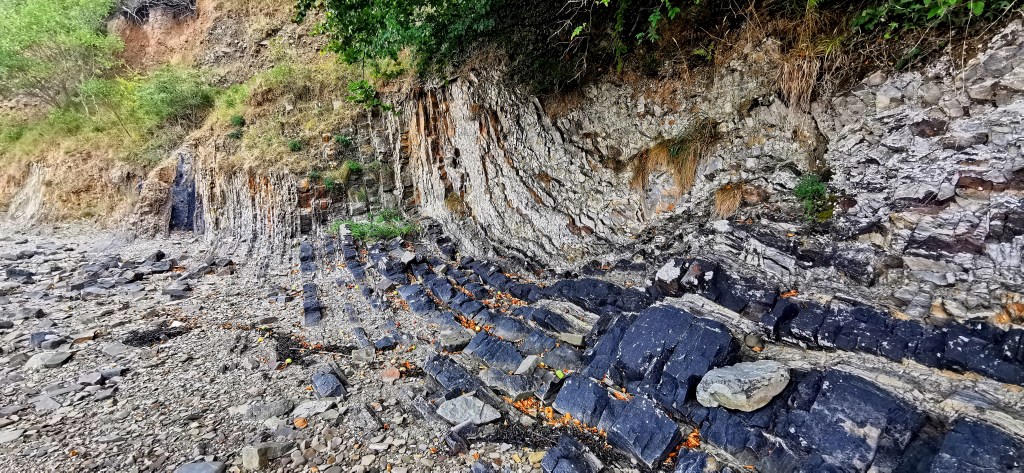
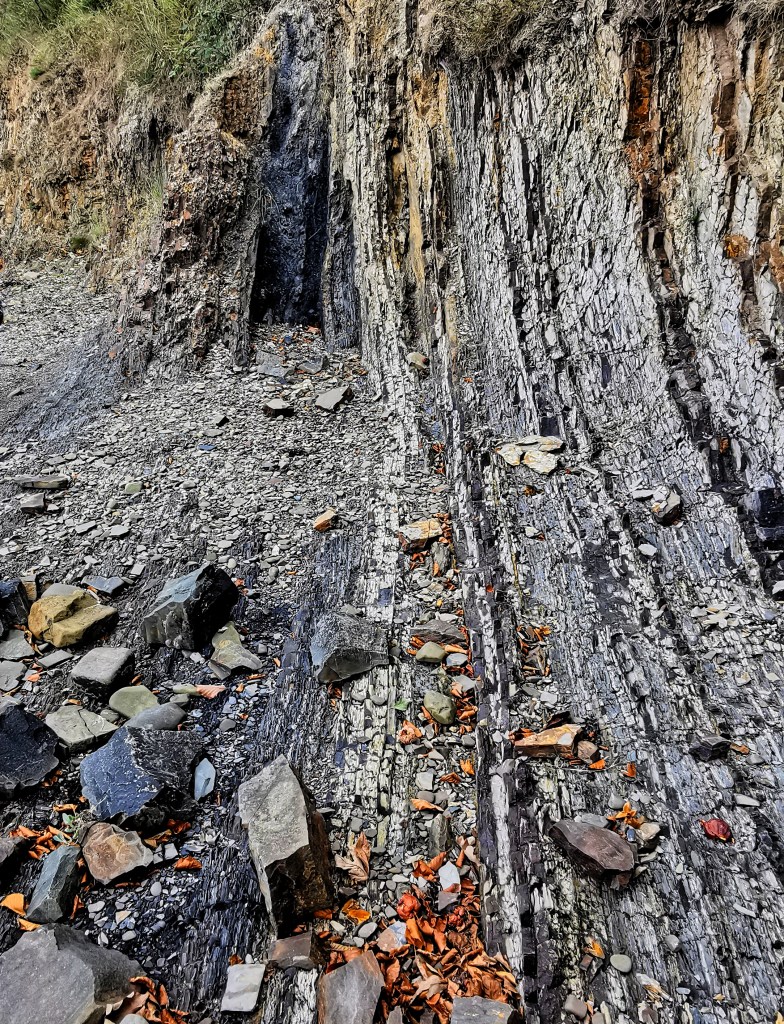
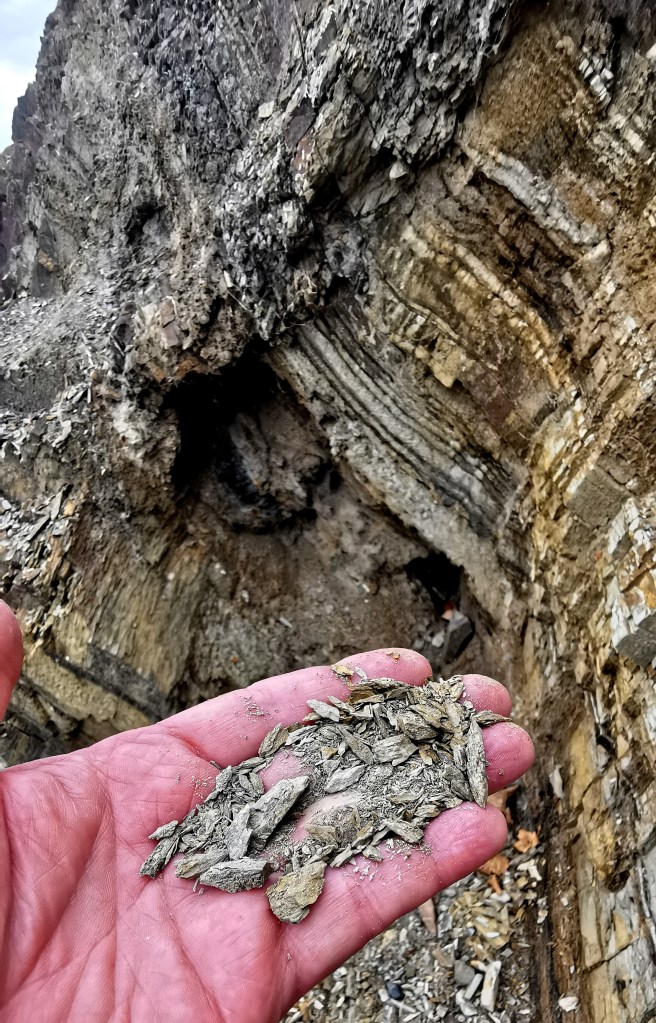
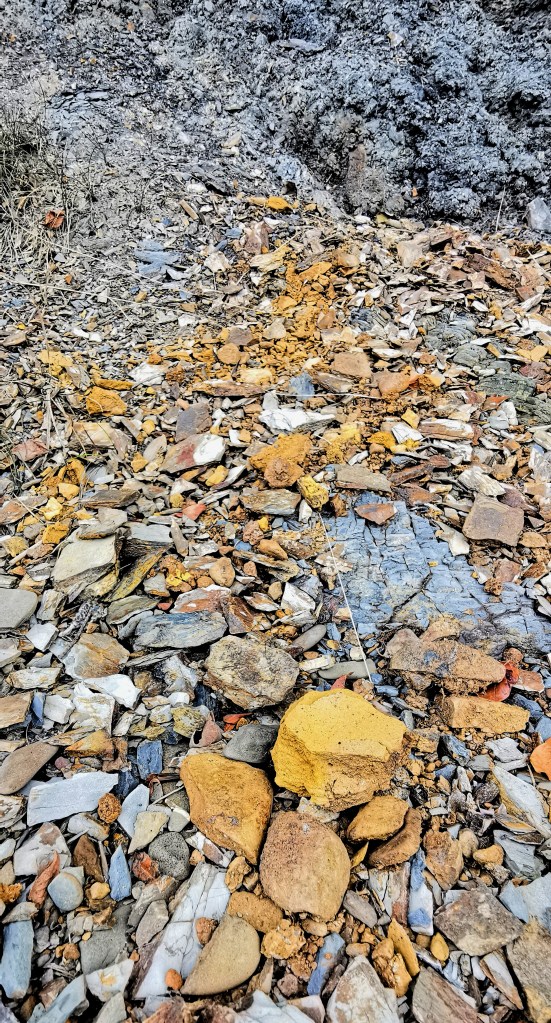
I’ve spent an interesting afternoon looking through the rock strata at Fremington Quay. I’ve collected Bideford Black from Greencliff at Abbotsham and used the blackish colour called Poor Man’s Coal from here at Fremington too. A renowned pigment artist called Peter Ward mentions that there are other distinct colours to collect here too, namely, Yellow Ochre, Burnt Umber, White Clay and Grey. On inspection these pigments are quite evident here so after collecting some samples I will prepare them for future painting projects. Below is a link to an interesting article by Peter Ward.

In search of the elusive Bideford Black.

In search of the elusive Bideford Black Pigment otherwise known as Biddie Black.  Running alongside seams of anthracite across North Devon is a black clay-like material that was mined for 200 years in Bideford for its uses as a strong black pigment. The unique ‘Mineral Black’, or ‘Biddiblack’ as it was known, was commercially produced for applications in the boat building industry, for colouring rubber products, for camouflage on tanks in WWII and was even bought by Max Factor for the production of mascara. The mines were closed in 1968 when the production of cheaper oil-based blacks and the depletion of the seam made the operation financially unviable, but many locals still remember the ‘Paint Mines’ and have tales to tell of using the paint or going into the now defunct mine shafts.  Today it’s revered by artists who love it’s inky black non reflective properties.  It first has to be dried, ground and then mixed with a medium such as PVA or Gum Arabic.  Looking forward to making my own now and seeing what images I can produce.  AL.

ps most of the information was from a website called The story of Bideford Black.