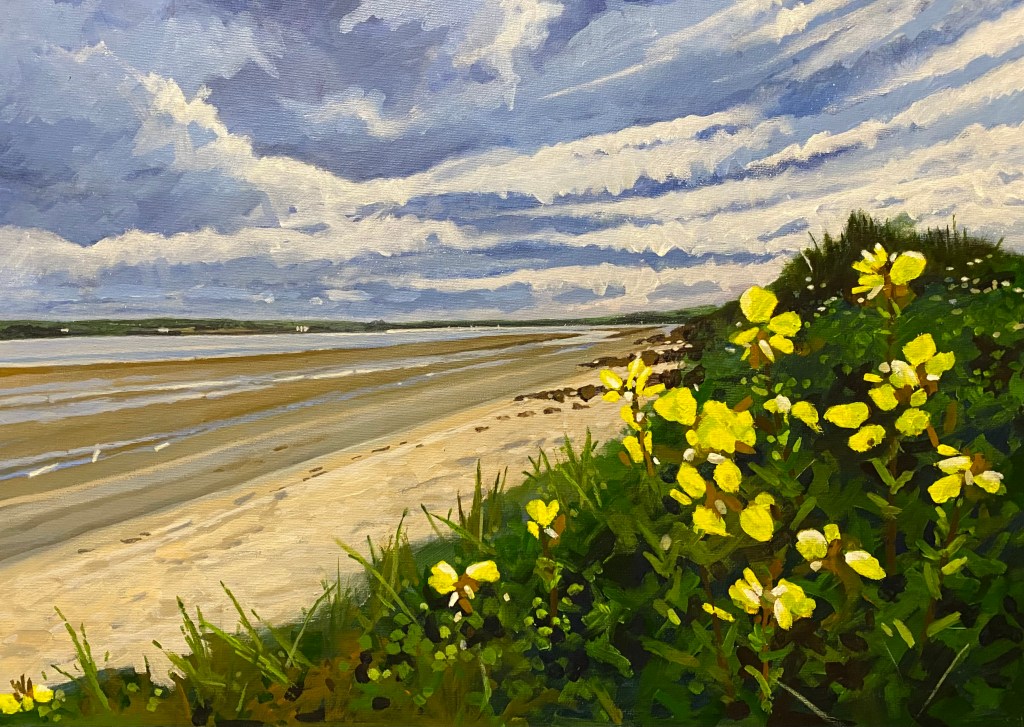
An exercise in not over working and titavating with a painting. This is about two hours work and the speed of paint application certainly concentrates the mind and eye. This is Crow Point on a typical mixed weather day with the evening primrose sprinkling the beachside. There are always some great cloud formations here over Appledore in the distance!
At the end of the beach boardwalk heading towards the Crow Point Carpark there is a a little pond of brackish water on the left. It is here where the brightly coloured damsel and dragon flies hover during the warm spring and summer. With this painting I’m trying to capture that Tulgey Wood sense of dark foreboding. I’ve also made a dark brushstroke across the sky to hint at a starling murmuration. This composition is in Bideford Black on thick cartridge paper, with some scraping and pigment removal.
When using this medium I often apply the paint using twigs, rags and stiff brushes with which to spatter fine specks. I also use scalpel blades, course and fine sandpapers and cotton buds to soften and remove pigment, in fact anything to create depth and texture to the composition. It helps to have a strong resilient paper with which to do so.
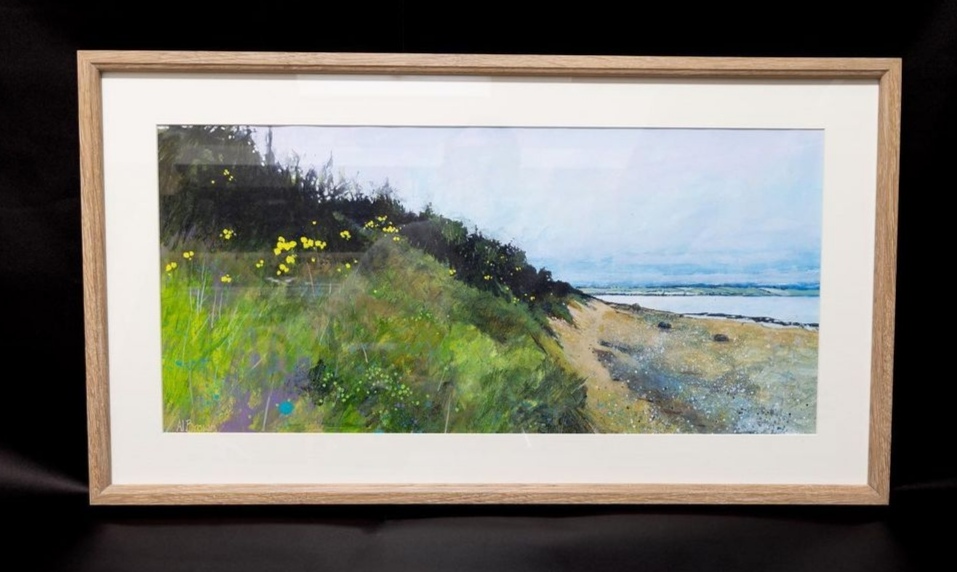
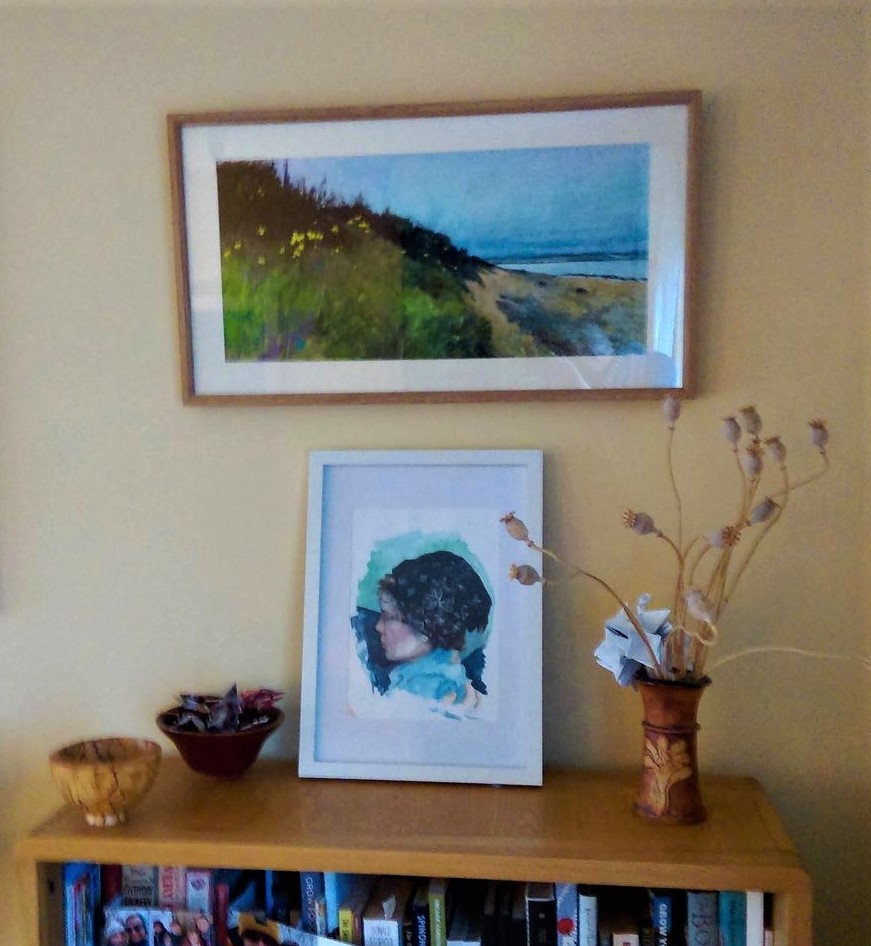
A plein air painting of Crow Point from last year on a rather wet and dismal afternoon. What beautiful framing by Julian Greaves Photography in Somerset. The new owner kindly says, ‘This beautiful painting captures the very essence of Crow Beach which has many wonderful memories for me – particularly times there with my Dad and his boat.’ Al
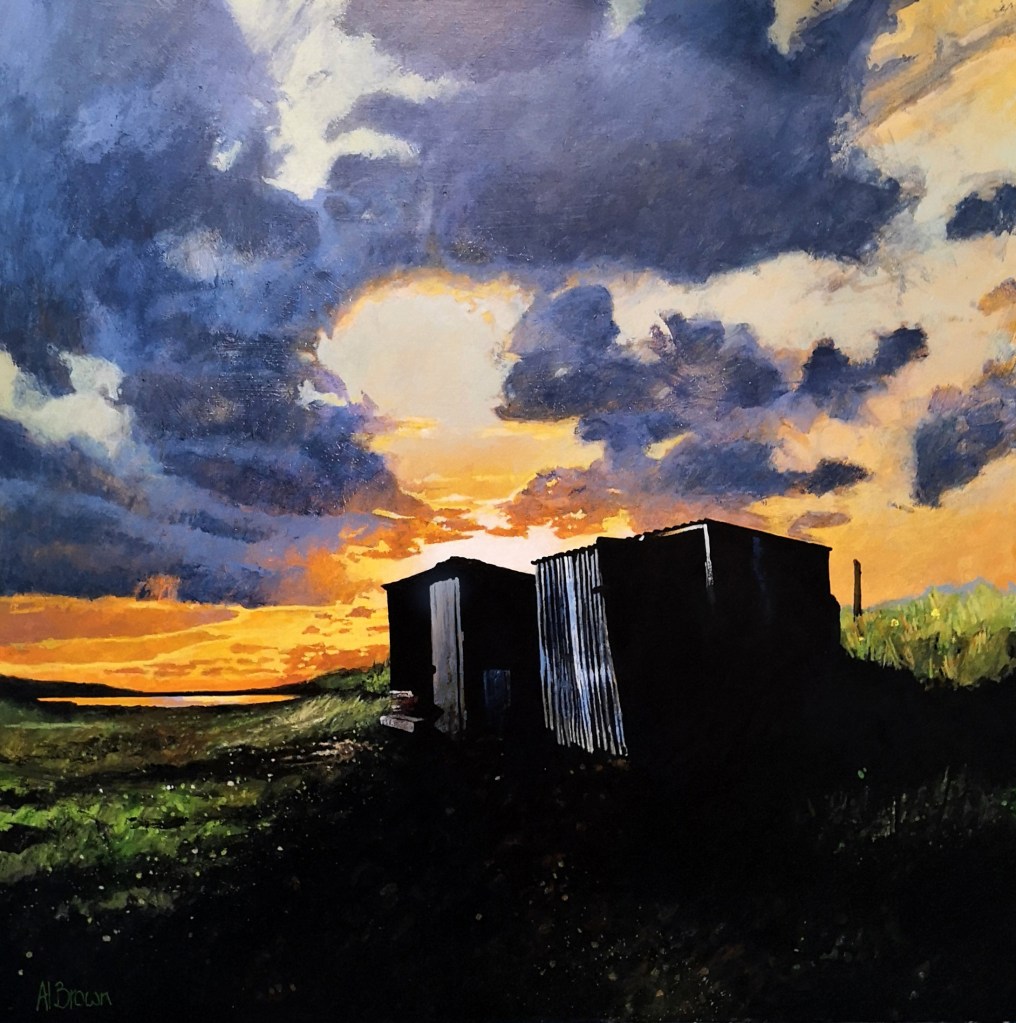
I was taken by an image on Facebook of a couple of old fisherman’s huts at Crow Point in North Devon and decided to sketch them in leu of a painting. I made my way to the White House at Crow and walked left along the thorn ridden breakwater; this is now the only way to get to these huts as part of the inner wall has collapsed. I arrived and marvelled at their rustic charm, rusty orange corrugated iron, weather bleached wooden doors and crude cobbles which remained from years ago. Quickly I took a series of photographs and made a few reference sketches eventually the dark clouds forebode and soon it began to rain. Luckily one of the huts wasn’t locked and I weathered out the storm in it’s solitude loving that sound of rain on iron. The smells of the estuary mud and seawater filled the air as I made my way back slipping on the mud and pebbles. After a little photoshopping, which I use for preliminary planning, I came up with this composition of the old huts. It’s often quite difficult to photograph paintings and the true colours and softness of the paint are missed, but on the whole I quite like this painting! These huts are placed at the crook of Horsey Island on the Braunton Marsh just where the River Caen (Braunton Canal) meets the River Taw. In the painting you can see The Taw in the background. Recently the inner tide Sea defences have failed and now Horsey Island has returned to the brackish muds of the Estuary.
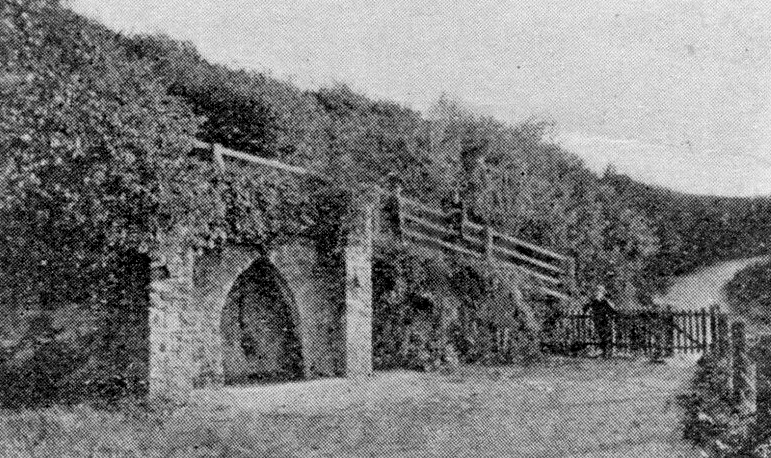
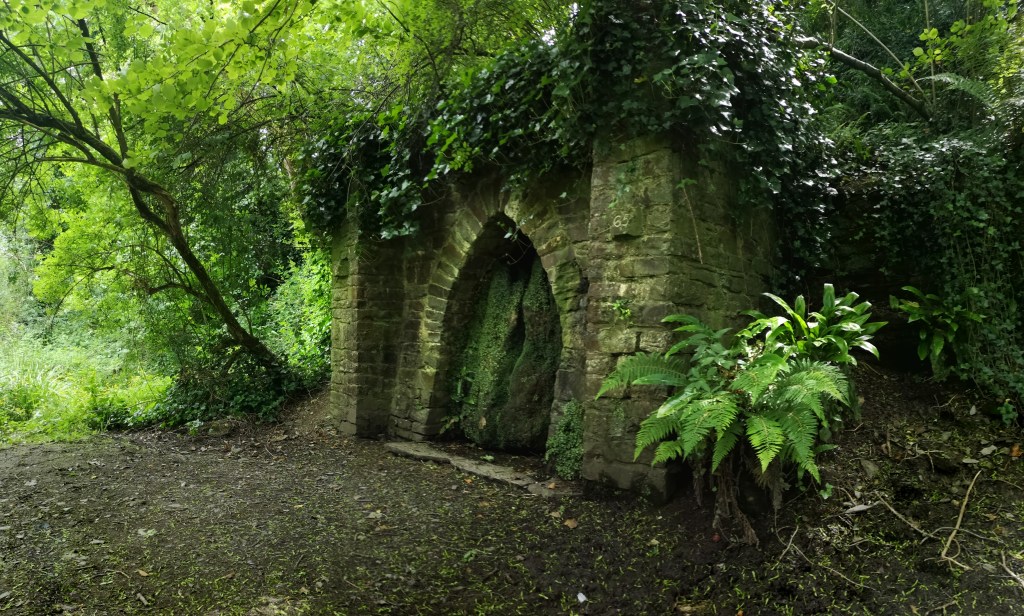
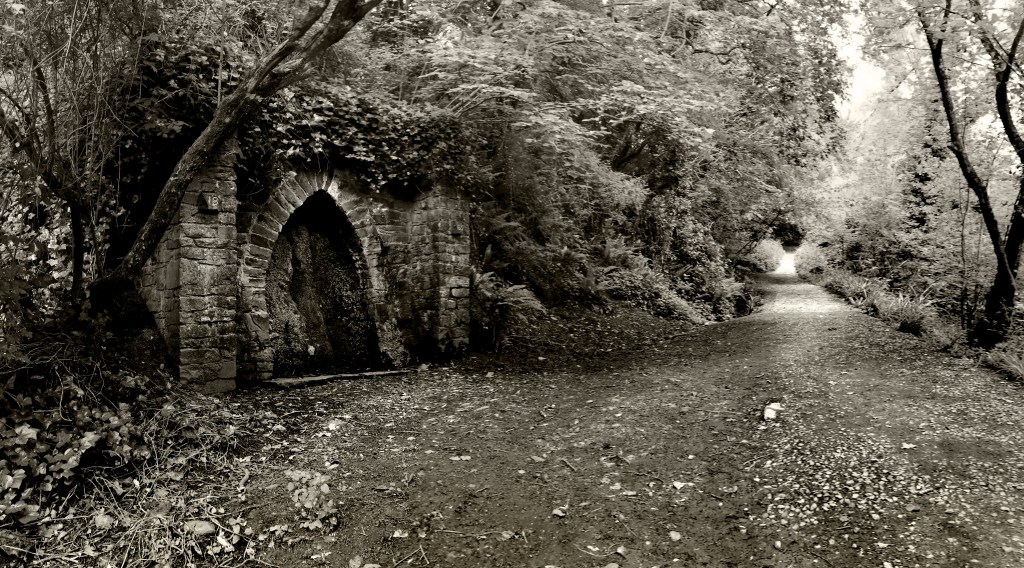
The Wishing Well as we called it as children when we played in Anchor Woods was known in past times as a Holy Well or Sacred Spring. On the wall there are carved stones on the left 18 and the right 65, date 1865. Above the left stone a colony of bees resides. It has been noted that there was at one time another stone engraved BR after Sir Henry Bourchier Wrey (1829-1900) a member of the Devonshire Gentry. As children and even now when passing, if you pick a dock leaf for a folded spout and place it into the sandstone crack of the spring a cool steady flow of water flows. The water’s always tasted very cool and pleasant. Perhaps it should be tested now because of many new houses built at the top of the wood. I will add more to this article once a visit to our local Athenaeum has been made.
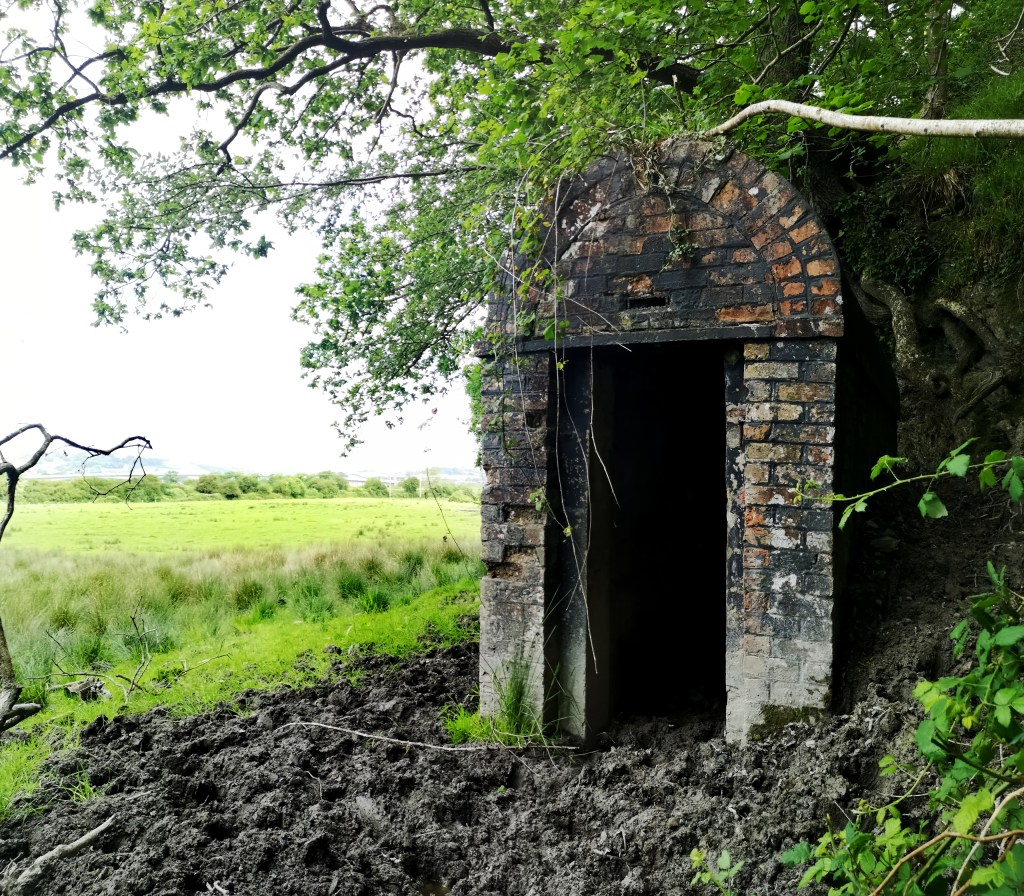
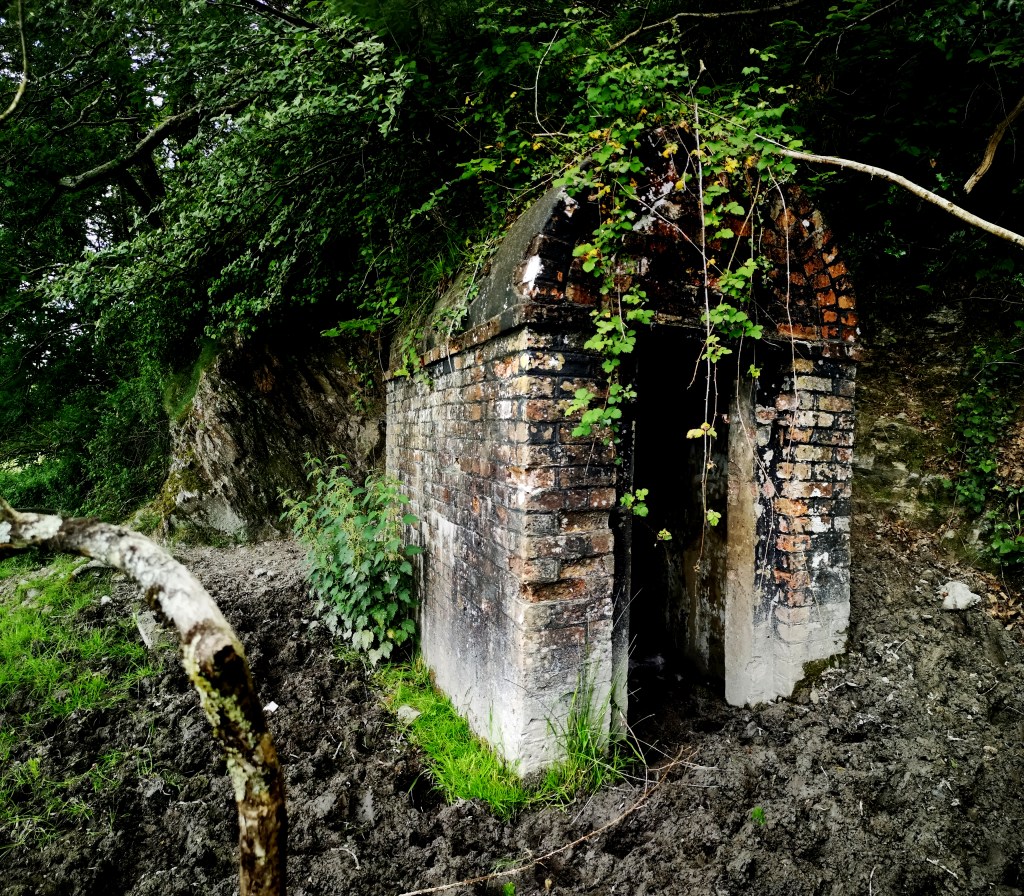
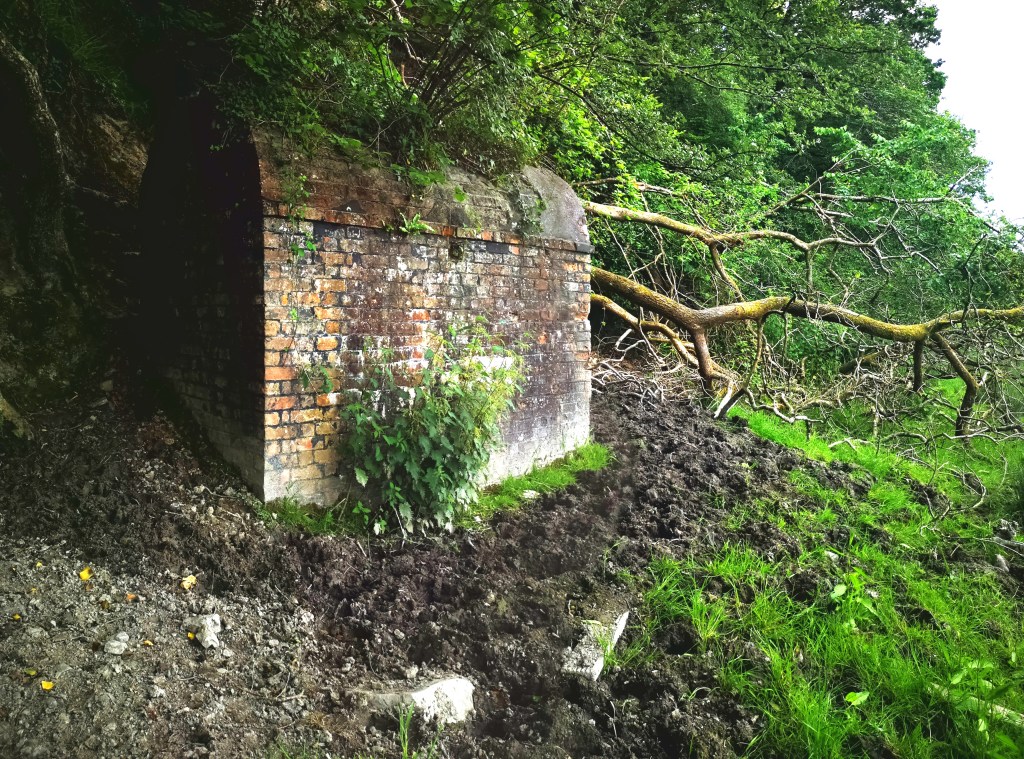
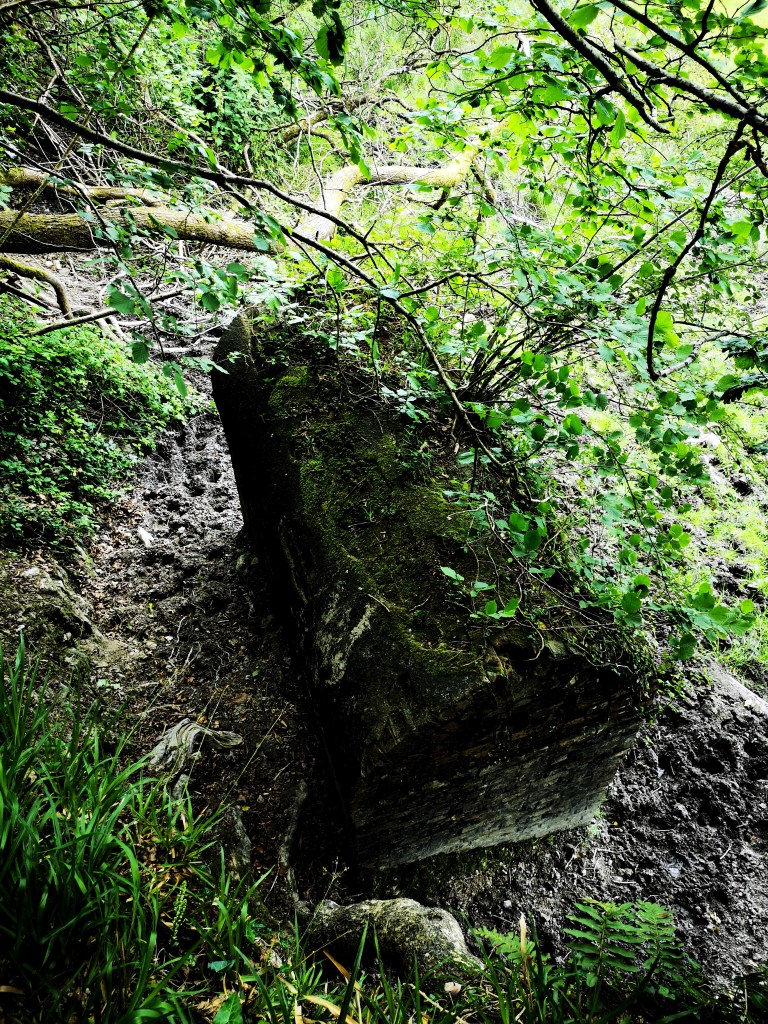
Today on a cycle ride I decided to revisit an old childhood haunt of Anchor Woods and this particular WW2 ammunition store. My late father mentioned in a memory that the field in which this store resides was used as a target range at the time of the second world war and this structure was store. If anyone has any more information about this pla please let me know. Al
An acrylic sketch on gesso panel 400 x 300mm of a warm Autumn evening on the River Taw in North Devon. After an enjoyable cycle around the area I spotted a kingfisher off the slipway on Barnstaple Quay. On returning home I came across this view! The original image is more subtle in colour and tone. This is probably my last image of 2019! Al
An acrylic of a windswept tree on the banks of the River Taw, Barnstaple, North Devon. As a boy I used to play in the woods and this field. Just over the dyke at the back of this painting is the River Taw. Loved the reflections of this tree in the water of this low lying field. This field is used for sheep but during the last war was a firing range. Al











 Al Brown Artist.