
Framed and in a new home. An old pastel sketch of people enjoying the surf at Saunton Sands as the tide goes out! I love how the water leaves that glasslike appearance on the sand. The reflections are often breathtaking!

Framed and in a new home. An old pastel sketch of people enjoying the surf at Saunton Sands as the tide goes out! I love how the water leaves that glasslike appearance on the sand. The reflections are often breathtaking!
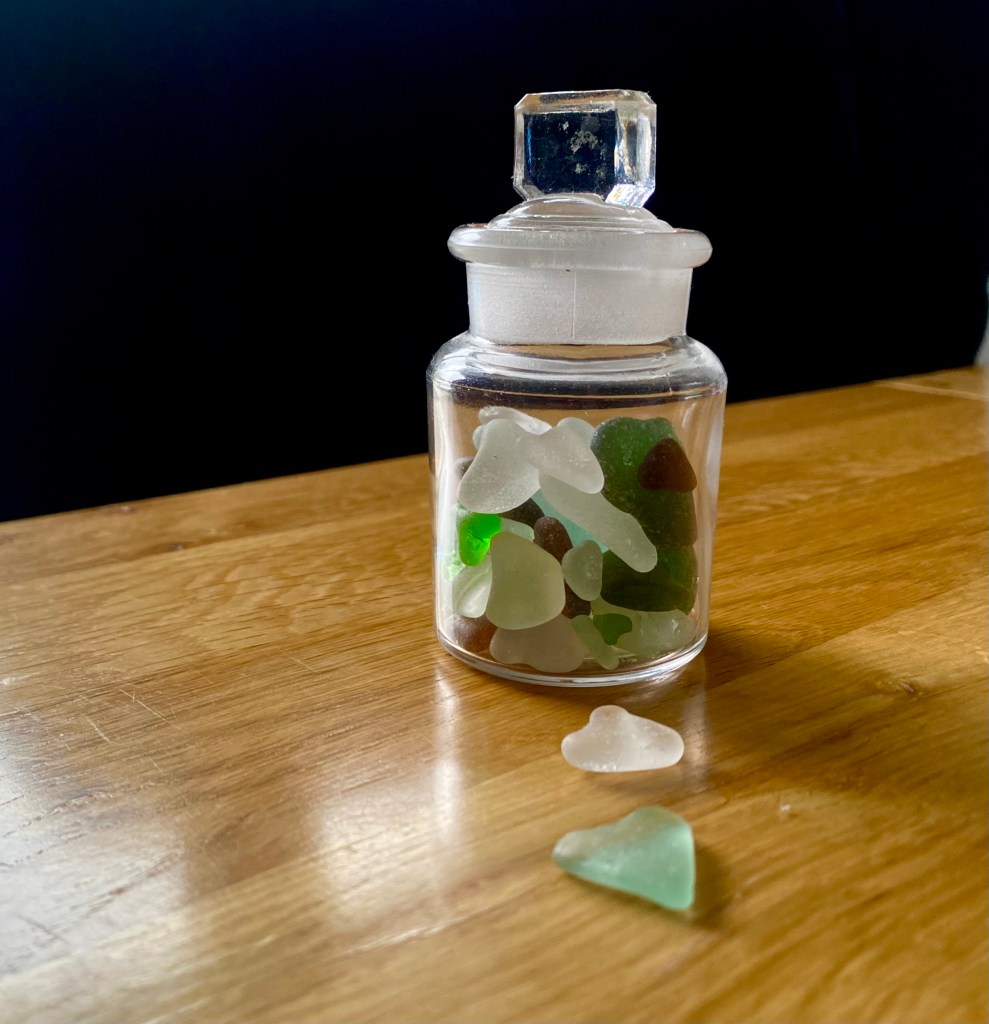

My wife and I often search for Seaglass on trips to our local beaches in North Devon and sometimes we fine heart shaped glass! This is a special jar of the hearts we’ve found so far! ♥️
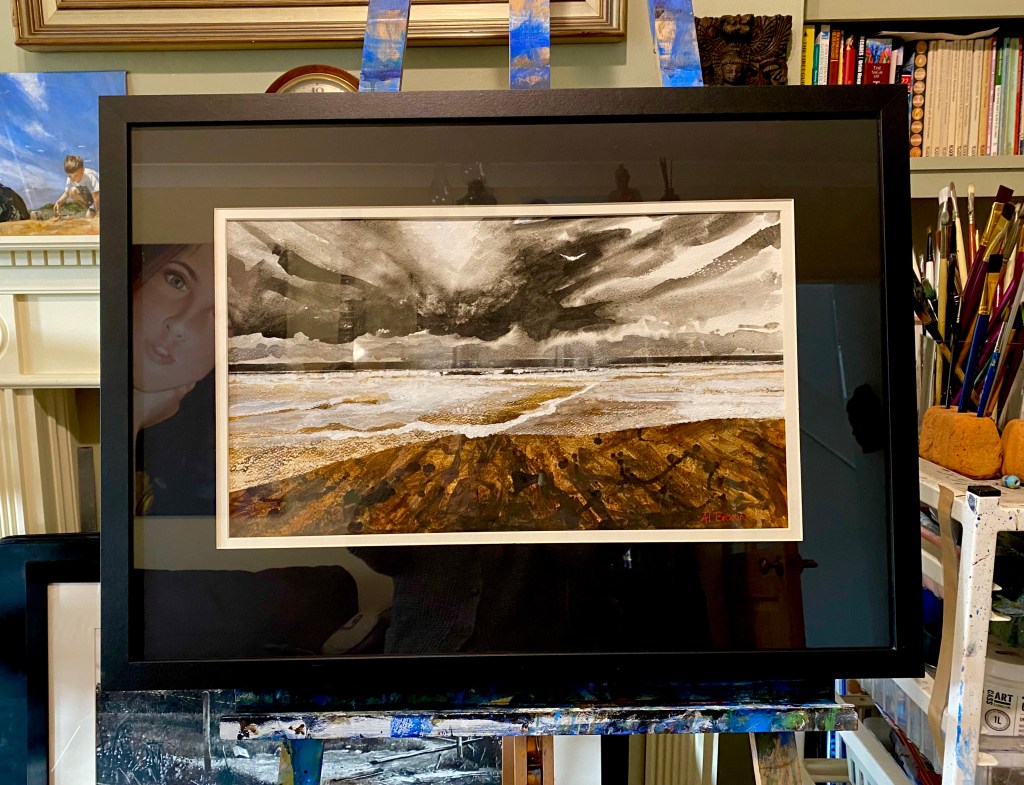
Saunton Sands painted on Bockingford paper using natural pigments found at Fremington Quay in North Devon. Amongst the rocks and strata at Fremington are various pigments including the usual Bideford Black, which I usually get from Greencliff at Abbotsham, a blackish colour called Poor Man’s Coal, Yellow Ochre, Burnt Umber, White Clay and Grey. I collect these pigments for further preparation where I finely ground them and use them for my paintings!
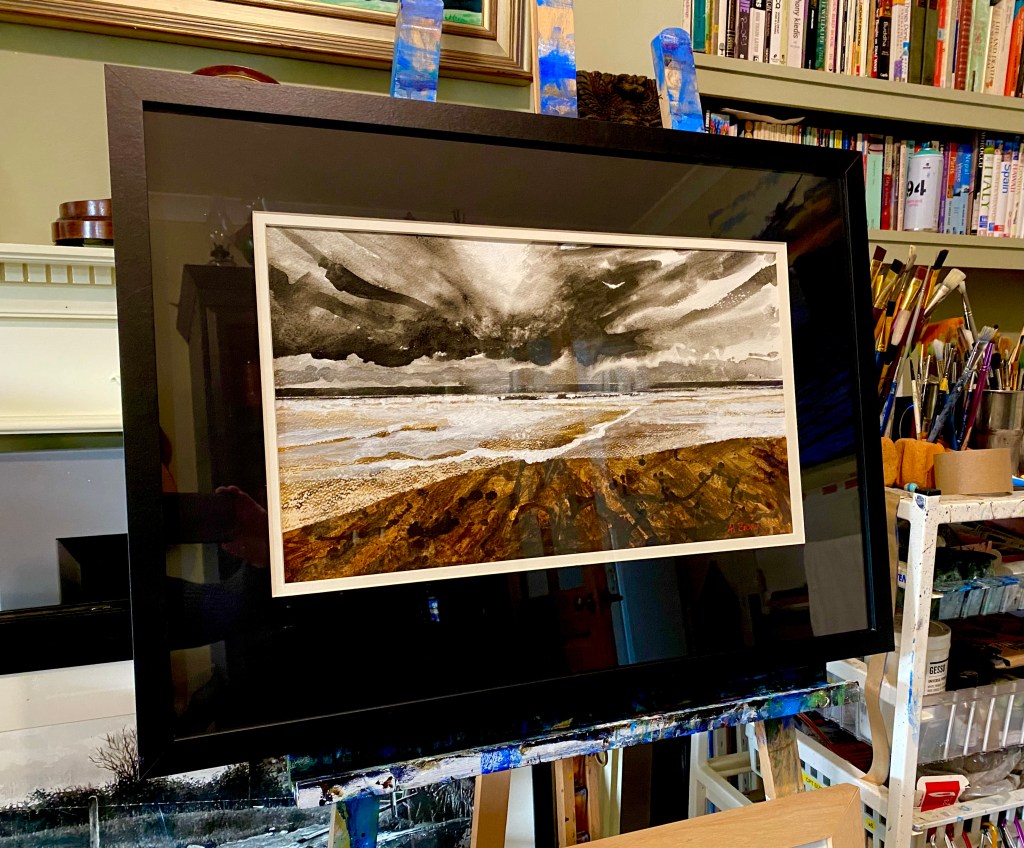


At the end of the beach boardwalk heading towards the Crow Point Carpark there is a a little pond of brackish water on the left. It is here where the brightly coloured damsel and dragon flies hover during the warm spring and summer. With this painting I’m trying to capture that Tulgey Wood sense of dark foreboding. I’ve also made a dark brushstroke across the sky to hint at a starling murmuration. This composition is in Bideford Black on thick cartridge paper, with some scraping and pigment removal.
When using this medium I often apply the paint using twigs, rags and stiff brushes with which to spatter fine specks. I also use scalpel blades, course and fine sandpapers and cotton buds to soften and remove pigment, in fact anything to create depth and texture to the composition. It helps to have a strong resilient paper with which to do so.
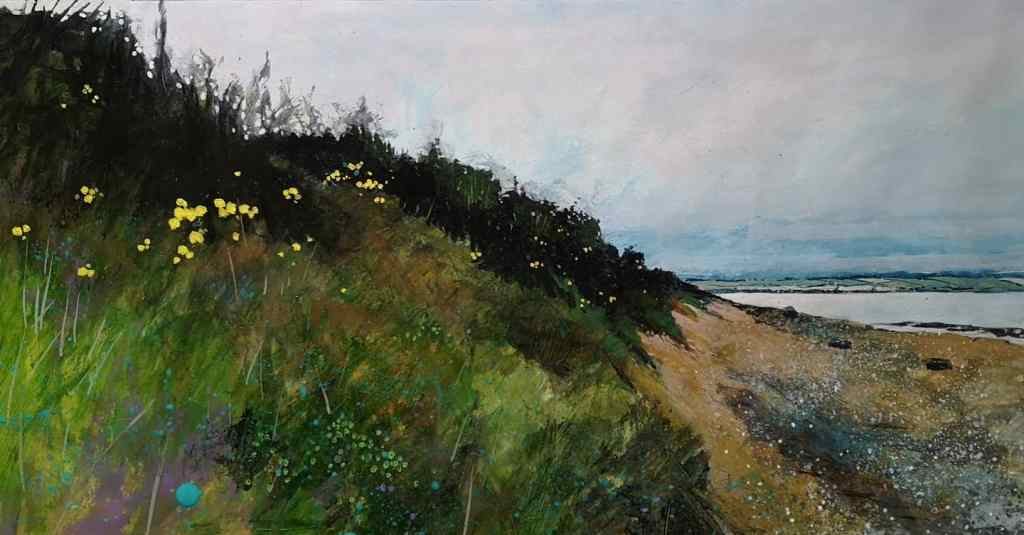
I attended an interesting walk and talk arranged by the Braunton Countryside Centre about the Second World War and the Burrows. I sketched a quick picture of the waterside as I’ve never seen so many Evening Primrose plants in flower. Quite an unusual light this morning quite humid, it reminded me of that Monsoon type light. I was amazed at the amount of Evening Primrose in bloom, the flowers looked even brighter against the dark sky.
This morning there was an enjoyable walk arranged by the Braunton Countryside Center it was about the Burrows and it’s World War Two usage for the D Day Landings. Many Americans were trained here for beach assault the person who lead the walk and talk was by Richard Bass a WW2 Historian from the Assault Training Centre Friends. If you can get onto one of these walks it’s well worth the effort. Al
https://assaulttrainingcenterfriends.co.uk/
Braunton Countryside Centre are on both Facebook and the net!
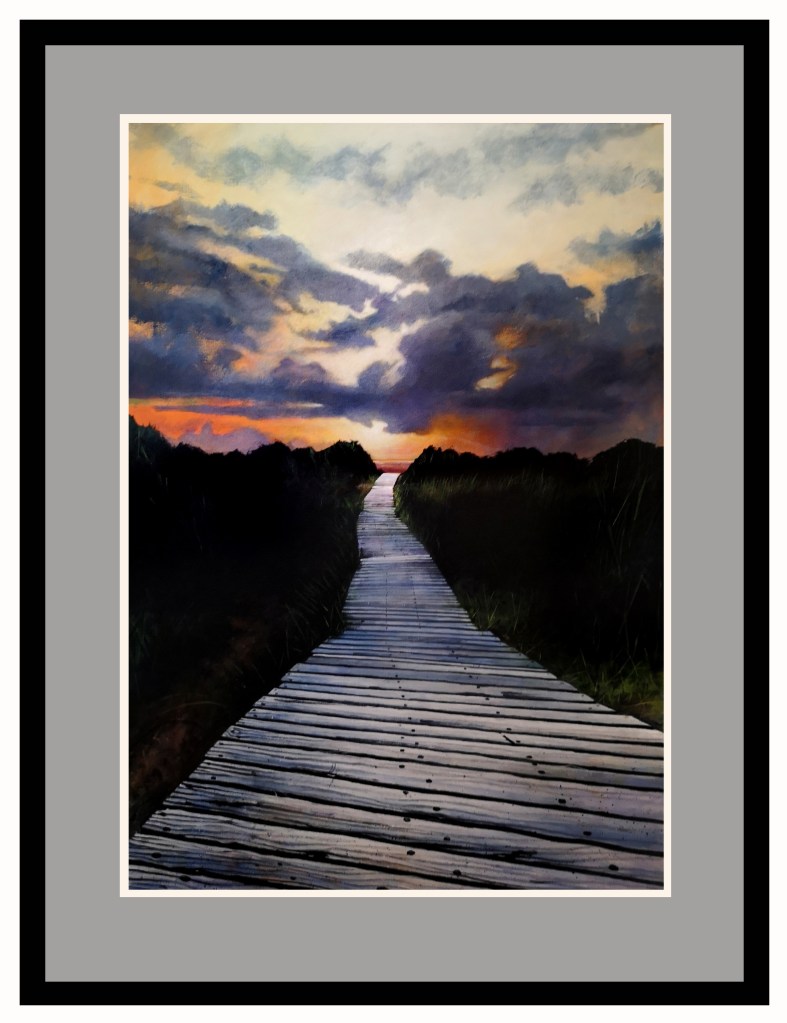
An acrylic painting on 1000 x 700mm canvas just to keep my flow going during the first part of this year. This composition was going to be of a Hercules C130 transporter flying low over Crow Point at sunset, but after completion I have decided to omit it. My wife and I had been walking around the Point from Saunton Beach then decided, as it was getting late, to walk back along the boarwalk before the light went. Looking back towards the sunset the sun bleached boards were almost luminous under the ebbing light. This is my attempt at setting that scene! Al

Sandy Lane Poppies 1220 x 610mm acrylic on panel. A painting of the dusty lane that leads to the Burrows Carpark in Braunton just behind Saunton Beach. I was quite taken by the poppies in the hedge and the stark neon whiteness of the sandy road.
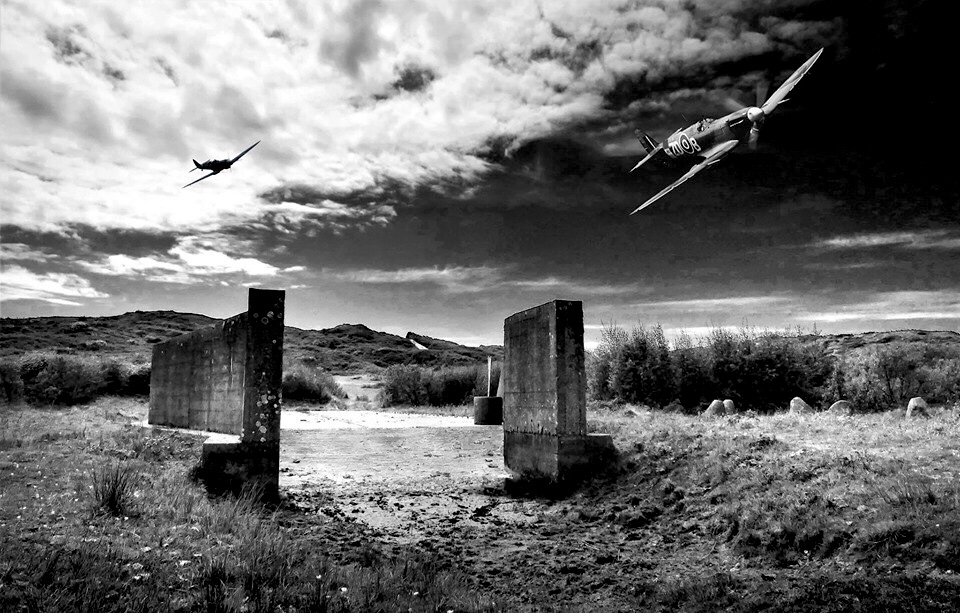
This is my version inspired by Buckham’s work of Spitfires over the US Assault Training Centre concrete landing craft on Braunton Burrows. These concrete structures, were laid during the World War 2 by the Americans when practising for the D Day Landings on Omaha and Utah by 146th Eng, Co C, 1st Platoon. Al
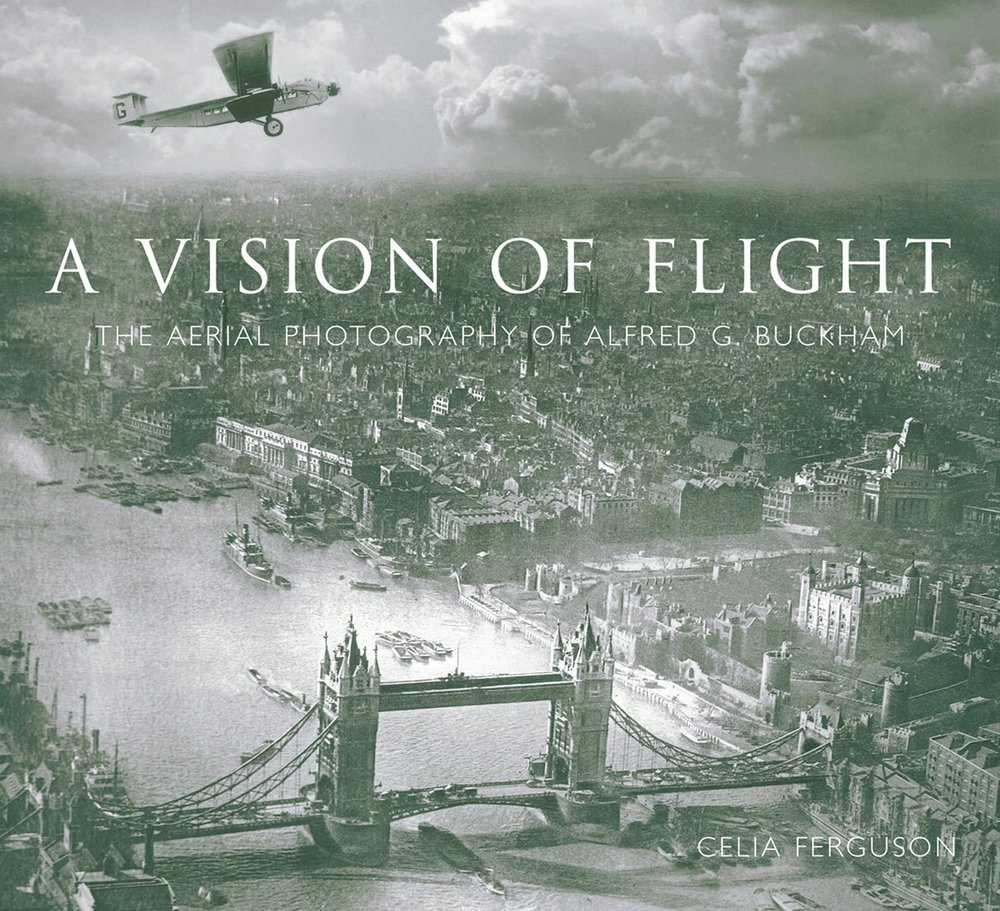
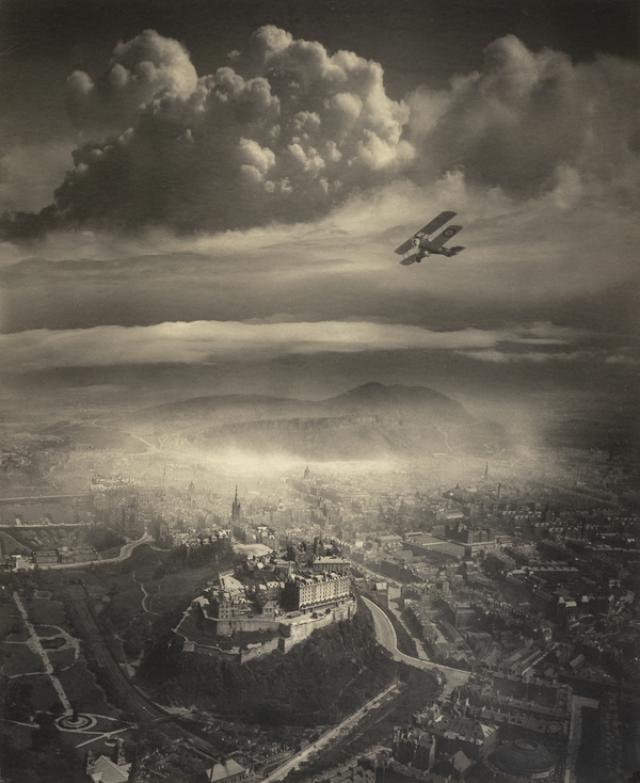
I’ve been looking recently at the old 1920s aerial photographs by Alfred G. Buckham. I loved looking at his pictures in old faded books when I was a child and marvelled at their imagination and camera angles, I later understood that they were actually skilful photo-montages.
Alfred was born in London on 6 November 1879. He began his career in photography in 1905 and joined the RAF as a reconnaissance photographer in 1917. He became the first head of aerial reconnaissance for the Royal Navy, in the First World War and later a captain in the Royal Naval Air Service.
Buckham was involved in 9 crashes, 8 of which saw him relatively unscathed. After the ninth, however, he had to have a tracheotomy and breathed through a small pipe in his neck for the rest of his life. Despite this, he carried on his aerial photography career, often in very perilous conditions. He felt the best shots were made standing up, writing “If one’s right leg is tied to the seat with a scarf or a piece of rope, it is possible to work in perfect security”.
 Hawker Hurricane over the Linhay on the Marsh!
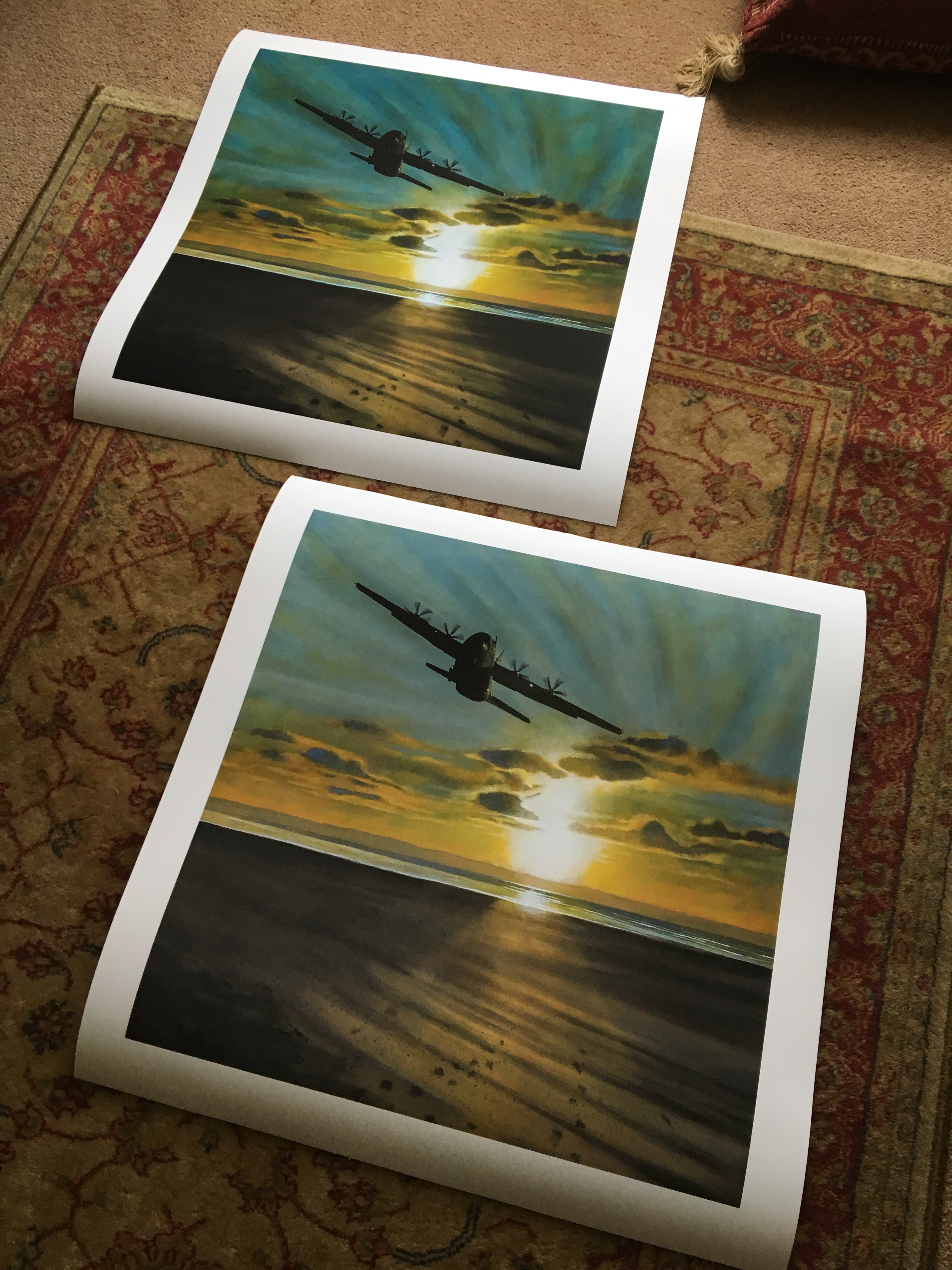 Many thanks to Adrian Beasley Imaging for these initial prints of one my paintings Hercules over Saunton, painted earlier in the year. Hercules practicing landing and take offs on Saunton Beach in North Devon.


Finished acrylic of Hut On The Burrows 405mm x 510mm). Another painting of the hut on Braunton Burrows North Devon. Just love this place and have spent recent hours watching the sticklebacks playing in the stream, which is called the boundary drain. Still liking the cow parsley! The last picture shows another picture of the same hut I painted during the winter wit early morning dew and ice on the water.
The linhays are another interesting feature of the Marshes. They were constructed as shelters for numerous cattle and almost all of them appear to have been built by the time of the 1842 tithe map. No two barns are the same, although most are of square or rectangular shape. Some have become dilapidated but around 30 still stand today. The one which attracts the most attention is the round linhay, a grade II listed building on the edge of the inner marsh road, which has been thatched and provides endless photographic opportunities. This excerpt is by Rowland Dibble on the Explore Braunton Website which is well worth a visit.
http://www.explorebraunton.org/linhays.aspx .
Al
 Al Brown Artist.