BRADIFORD VILLAGE A pen and ink drawing I’ve found in one of my old portfolios. This is where I lived for 23 years with my wife until our twins arrived. We have many happy memories of this place our cottage was the third house down and was named after our old cat Bonnington’s Cottage! Picture dedicated to our late neighbours Lucy & Ken Marsh.
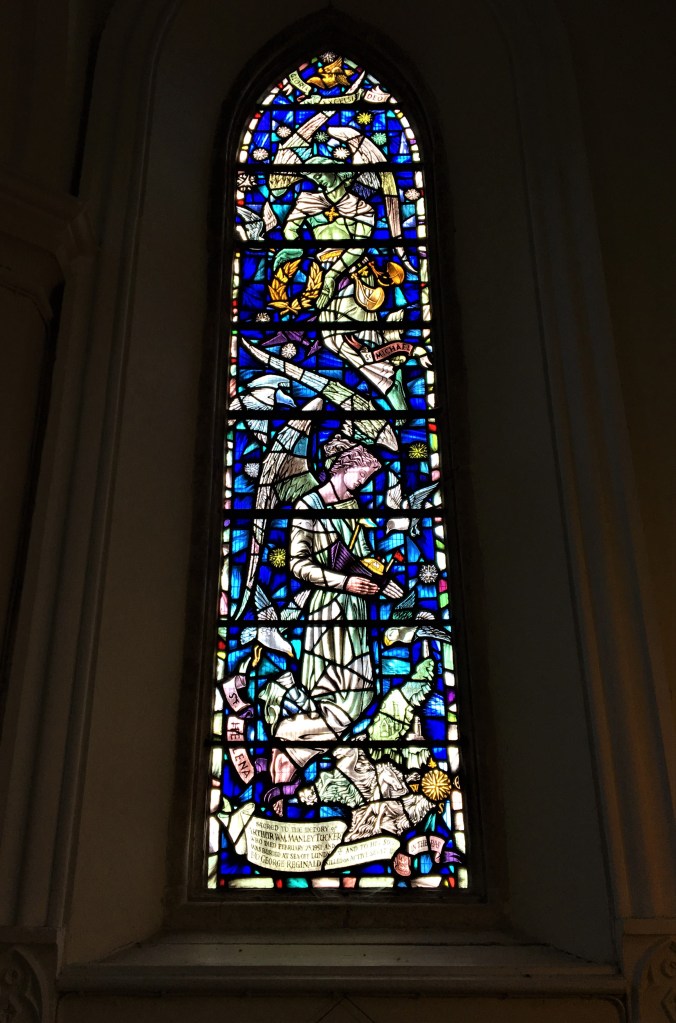
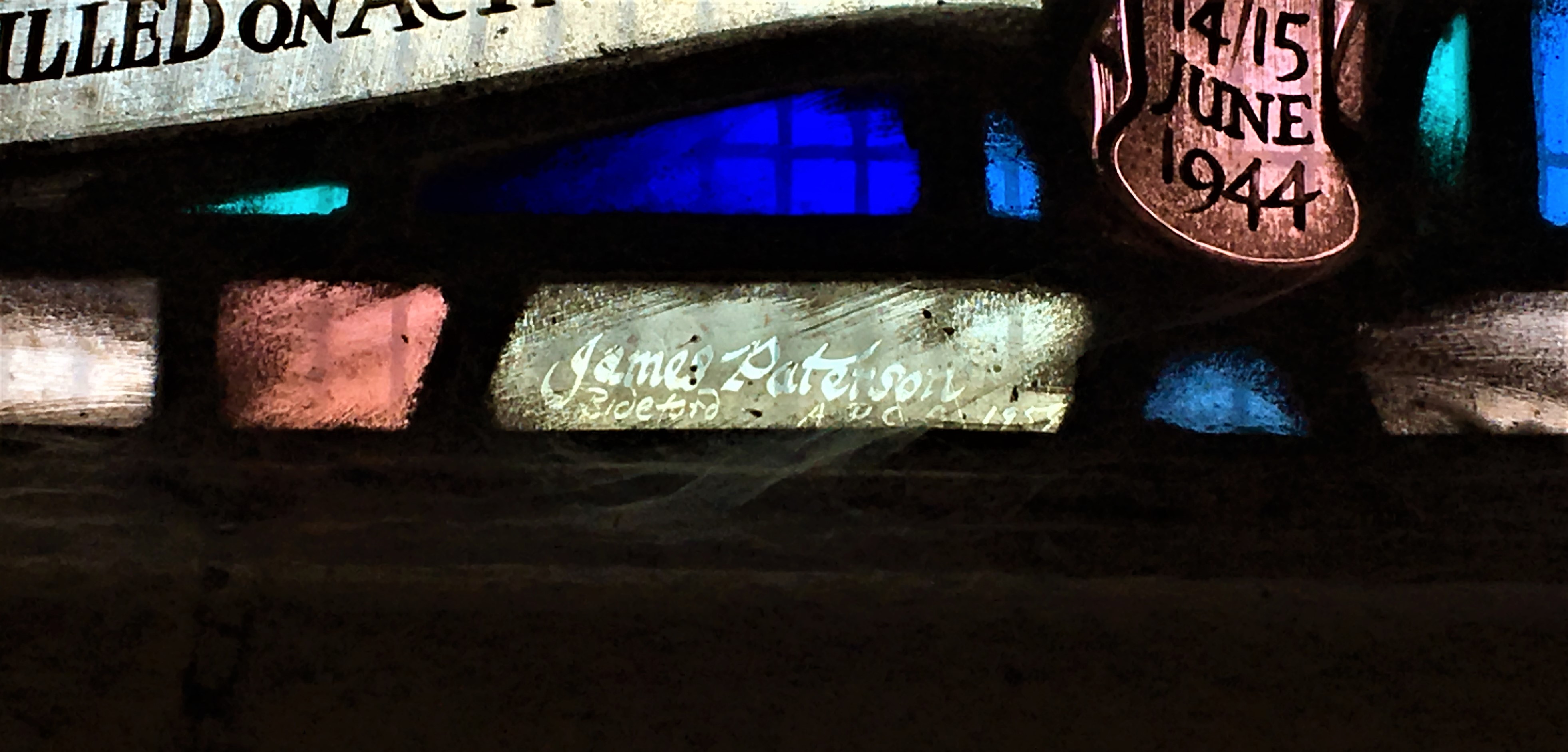
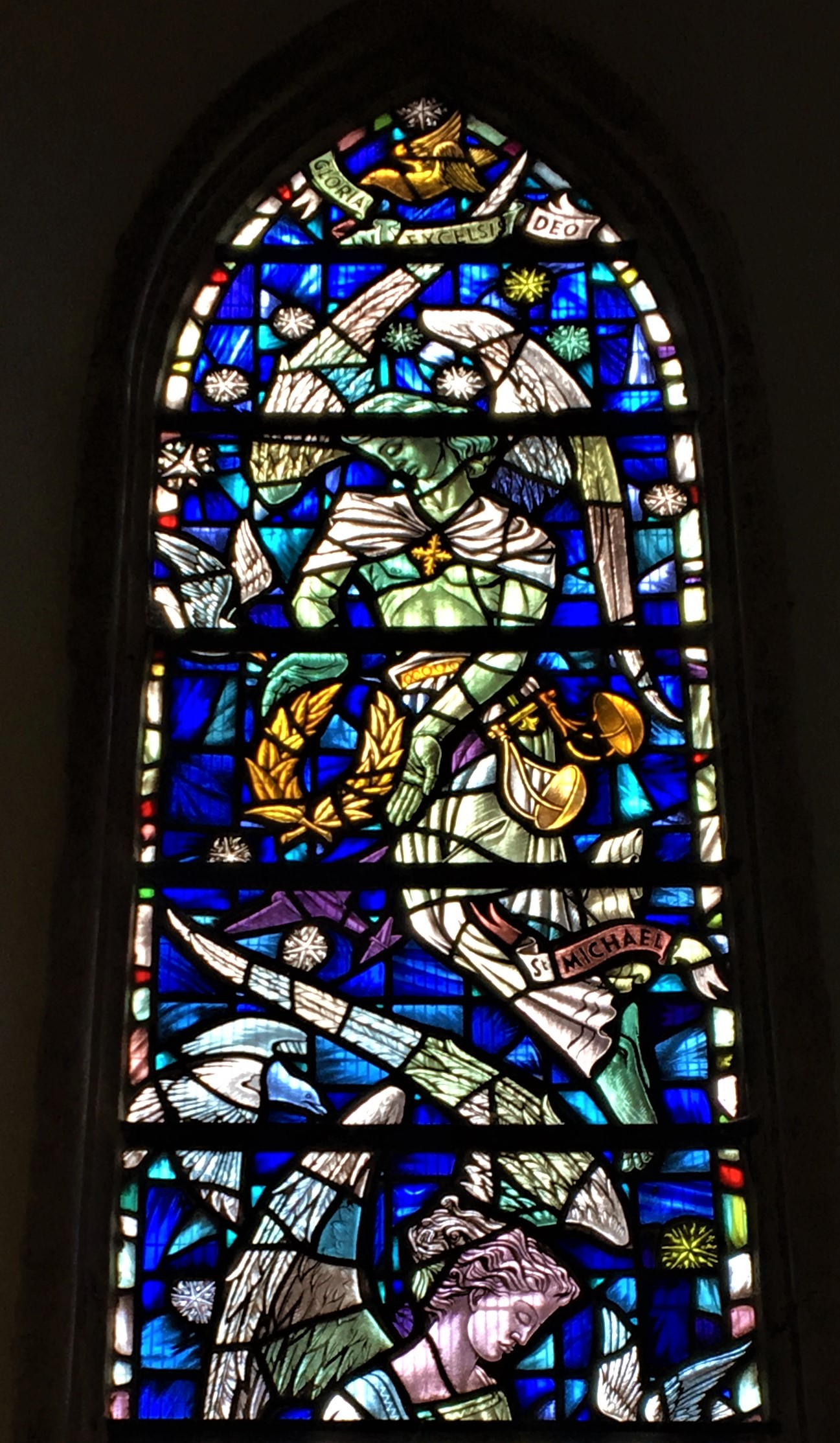
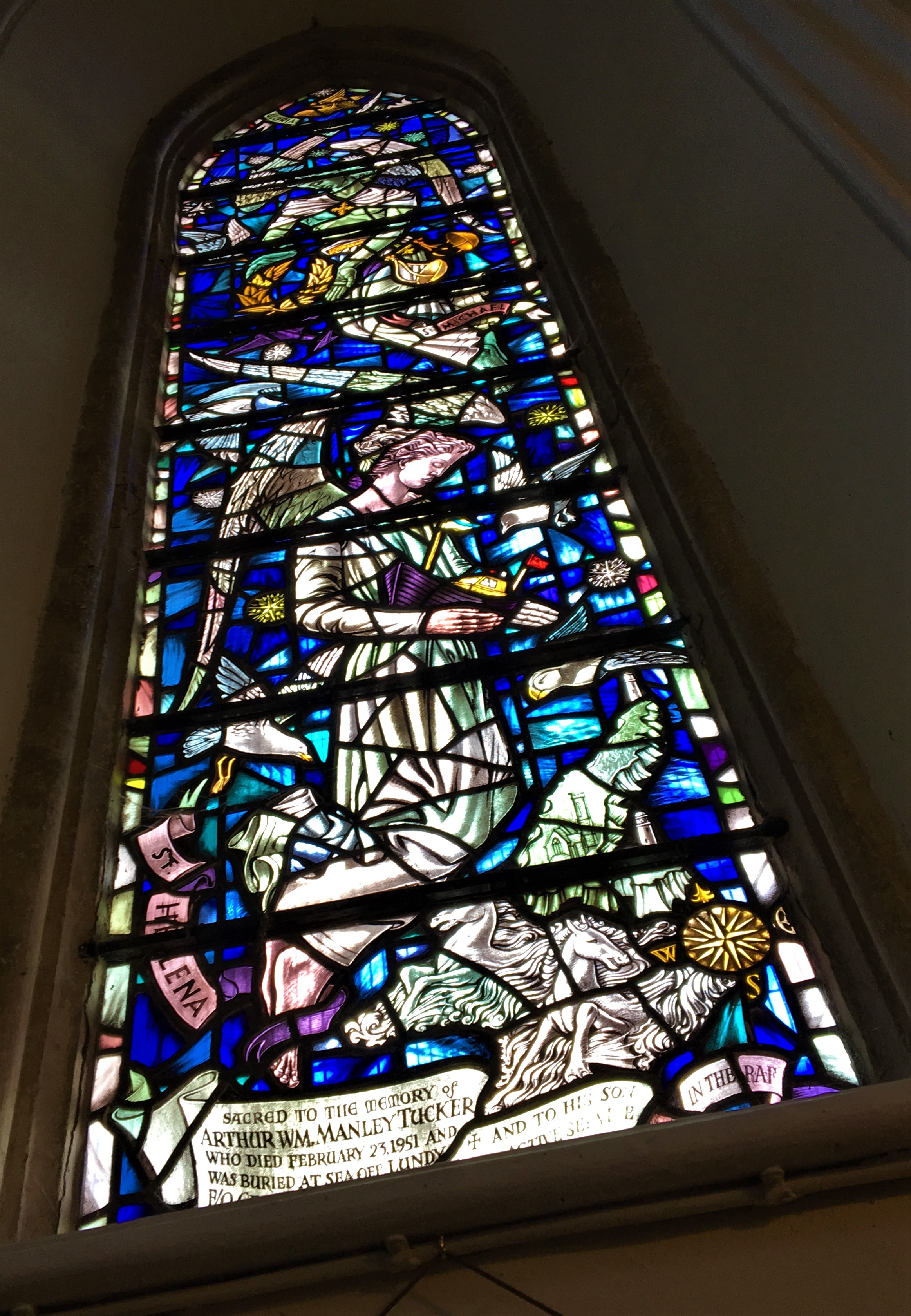
This window was designed by one of my old teachers, the Bideford artist James Peterson A.R.S.A. and portrays St Helena the Patron Saint of Lundy carrying a boat and St Michael with an aeroplane. There is also a map of Lundy with white horses as well as many sea birds which include, of course, a Puffin. It was given in memory of Arthur Manley Tucker and his son George. The father was buried off Lundy and his son was killed in action with the RAF in WW2.
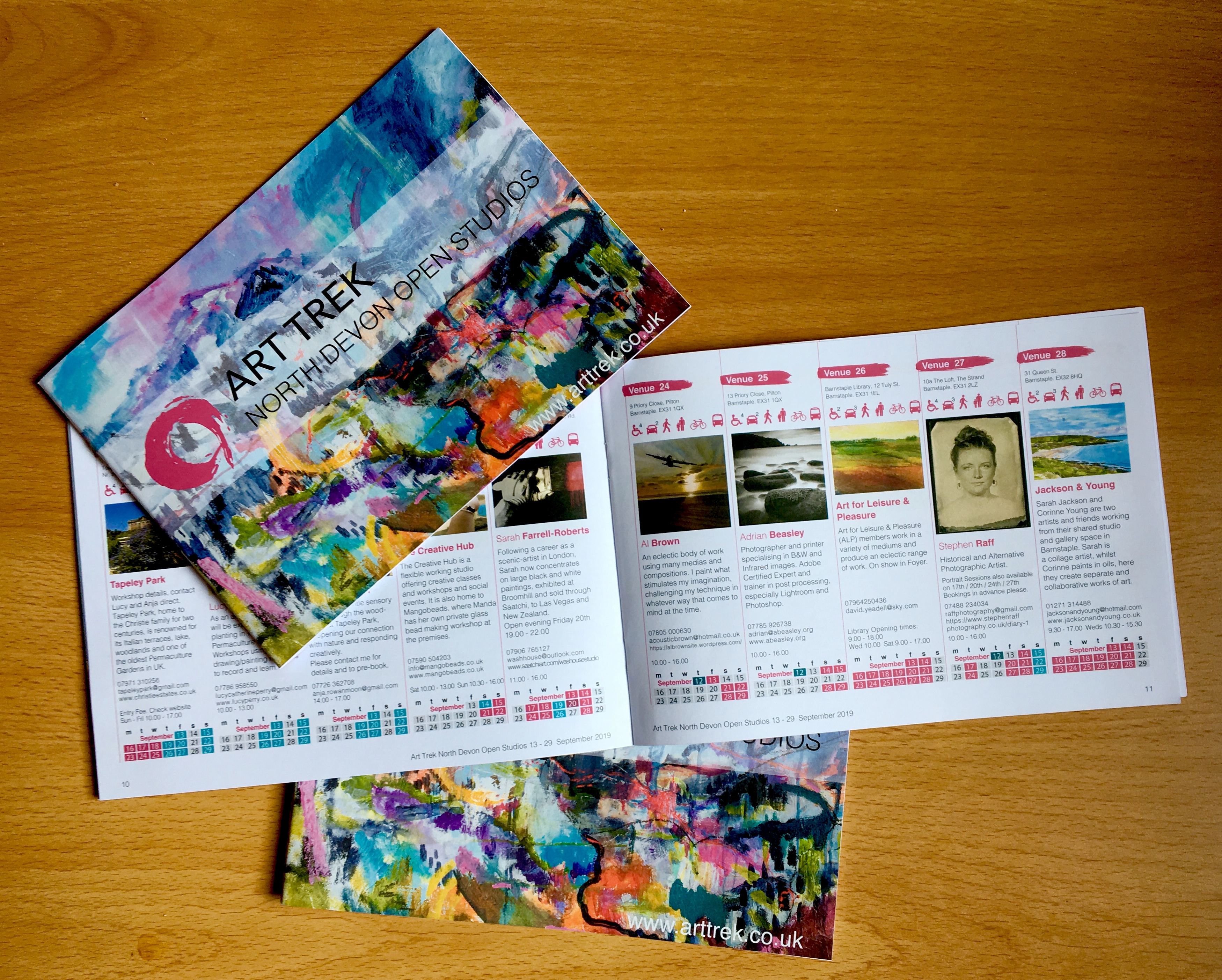
To start Art Trek this year Adrian Beasley, Stephen Raff and Al Brown will be holding an exhibition at The Old School used by The Pilton Art Group, beside Pilton Church. This is also near to the Ladywell in Pilton, Barnstaple EX31 1QT. The evening is a preview of our work Adrian & Stephen are both photographers and myself a multimedia artist. Should be an interesting evening including Adrian’s music and you’ll be pleased to know that drinks will also be available!
Another image in this WW2 photo montage series of planes flying from RAF Chivenor. This is what it may have looked like to see an Avro Anson flying low over the flood barrier heading back to RAF Chivenor, part of Coastal Command 1941.
My mother (who lived as a child in the cottage at Little Raleigh, Roborough, Barnstaple, North Devon) remembers an aircraft crashing into the wall opposite to where she lived, near to where the North Devon District Hospital now stands. Her brother Terrance visited the site the morning after and retrieved some of the clear perspex canopy. He then made rings inlaid with paste diamonds for some of the local girls in Derby. The account in now available from Robert Palmer MA, Titled The Last Flight of Avro Anson N9817. http://www.BritishMilitaryHistory.co.uk. January 15th 1940: Avro Anson 652 reg K6271. While on a night training mission, the crew was forced to attempt an emergency landing in a Barnstaple field for an unknown reason. At the time of the accident, the visibility was poor. The crew fate remains unknown. PLANE CRASH NEAR BARNSTAPLE Albert Percival Snelling 45, Pilot Killed: Engineer Rescued. MACHINE BURNT OUT: RICKS DESTROYED. The pilot lost his life and the other occupant was seriously injured when a twin engine aeroplane crashed which had for some considerable time been at Barnstaple and North Devon Aerodrome. Bureau Of Aircraft Accidents Archive.May 15th 1941: Avro Anson N9817. Crashes at Roborough, North Devon. Two pilots were killed as was an unfortunate road worker. The crash was documented as youthful exuberance. The had been performing a falling leaf manoeuvre and had sadly stalled their aircraft.August 27th 1941: A twin engine aircraft (probably an Avro Anson ) was reported “missing” in northern Cornwall, perhaps at Harland ; This plane was from Chivenor.July 4th 1958: VV362 Avro Anson, After taxiing in at RAF Chivenor, Devon, an ambulance was reversed in front of it to transfer a patient from the Anson. The pilot increased rpm to prevent oiling the plugs but the aircraft moved forward and struck the ambulance. The fuselage was twisted and the tail damaged. There were no injuries.October 17th 1960: WD451, Following an uneventful training mission from RAF St Athan, the crew mistakenly belly landed at RAF Chivenor. The aircraft slid for several yards before coming to rest and was damaged beyond repair. Both pilots were unhurt. The probable cause was thought to be that the crew mistakenly raised the landing gear on approach instead of lowering the flaps.
The image above is of Blackpool Mill Cottage at Hartland in North Devon. Images of the planes are from the Imperial War Museum Archive. The people are from Google Images of people receiving supplies during a WW2 airdrop. The cottage has been used in many films and TV dramas and is an image of mine. https://www.hartlandpeninsula.co.uk/self-catering/blackpool-mill-cottage.html
The image above is as if you happened to be cycling around the Braunton Marsh in North Devon during the second world war. RAF Chivenor is very close to the marsh and seeing such scenes must have been common place. Original aircraft image taken from Google Images and the marsh picture is one of mine.
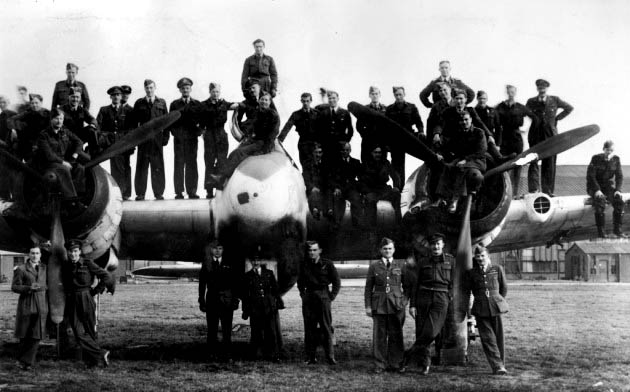
In July 1942 three squadrons of Bristol Beaufighters were located at RAF Chivenor in North Devon to offer protection to shipping in the Bay of Biscay and to undertake anti submarine duties. These comprised of 235, 236 & 248 Squadrons of the RAF. Wikipedia
The cockpit of a Beaufighter 252 Squadron RAF Chivenor Imperial War Museum. A Beaufighter and personnel of 235 Squadron, October 1942. North Devon Gazette.
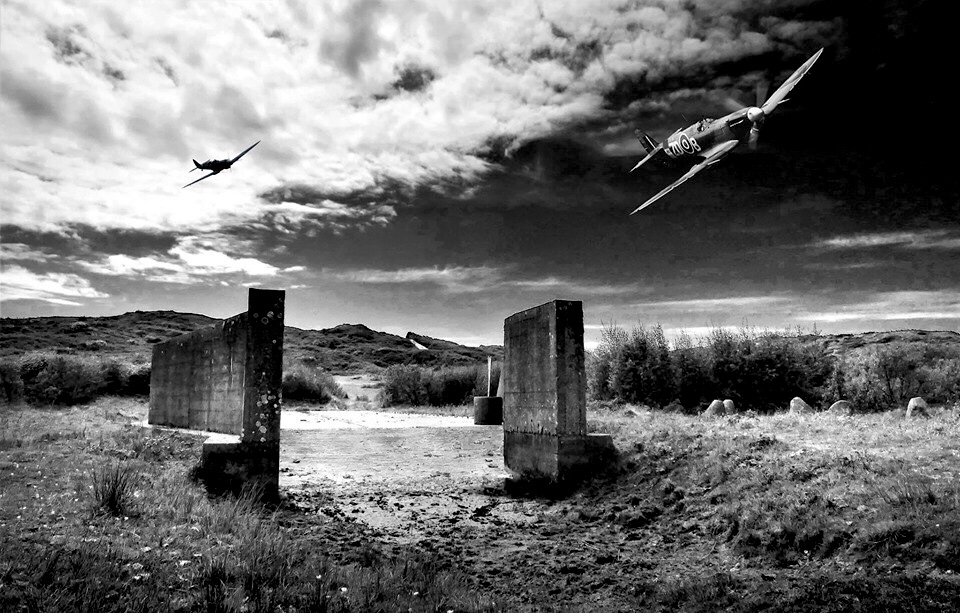
This is my version inspired by Buckham’s work of Spitfires over the US Assault Training Centre concrete landing craft on Braunton Burrows. These concrete structures, were laid during the World War 2 by the Americans when practising for the D Day Landings on Omaha and Utah by 146th Eng, Co C, 1st Platoon. Al
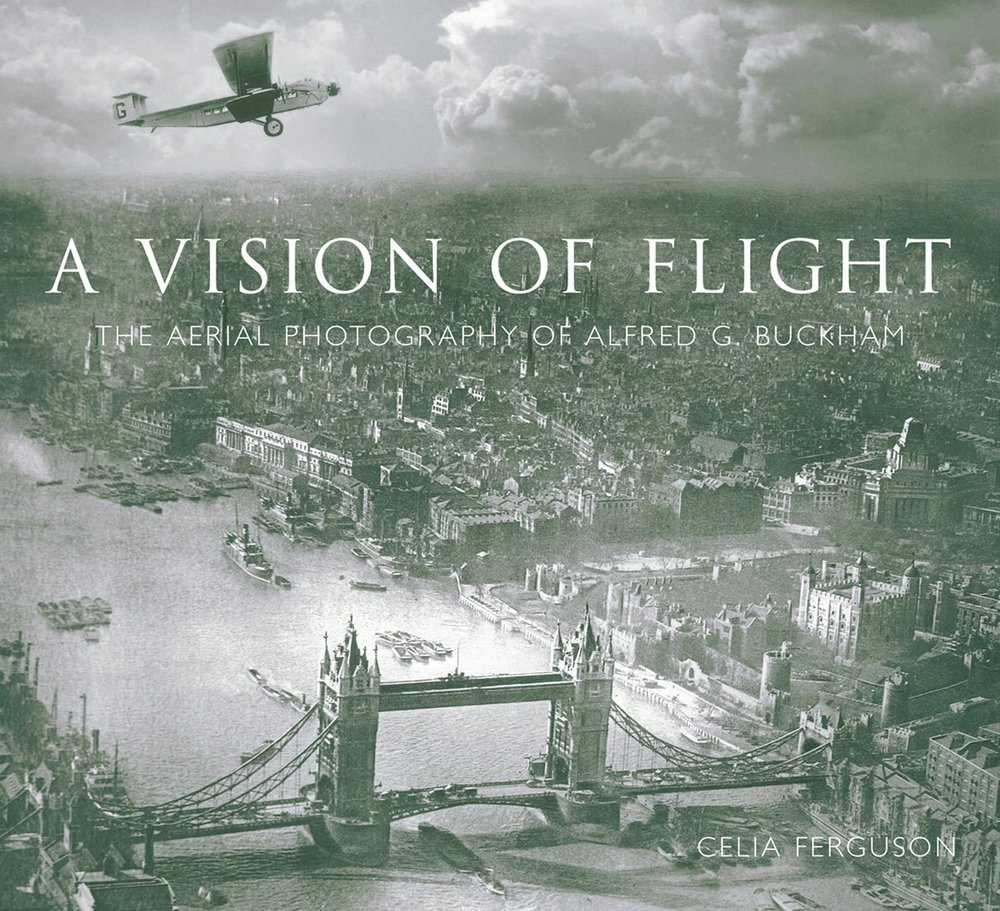
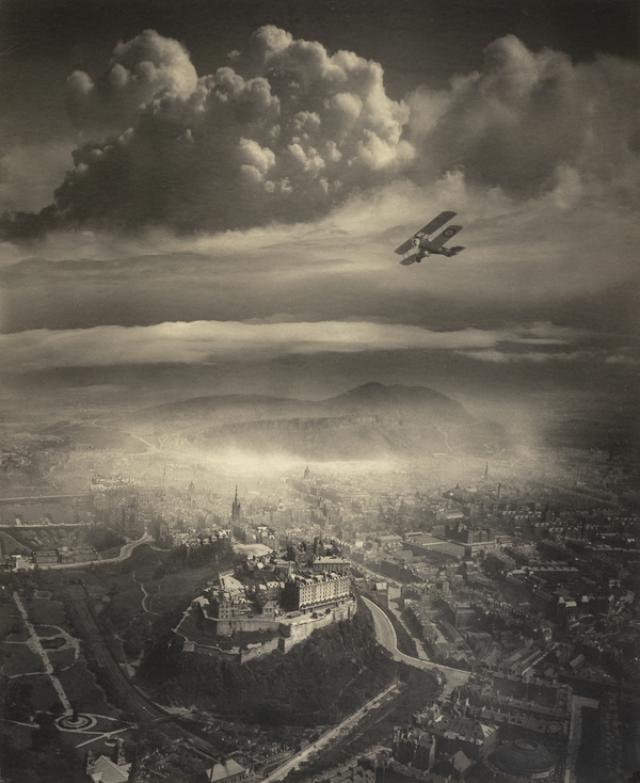
I’ve been looking recently at the old 1920s aerial photographs by Alfred G. Buckham. I loved looking at his pictures in old faded books when I was a child and marvelled at their imagination and camera angles, I later understood that they were actually skilful photo-montages. Alfred was born in London on 6 November 1879. He began his career in photography in 1905 and joined the RAF as a reconnaissance photographer in 1917. He became the first head of aerial reconnaissance for the Royal Navy, in the First World War and later a captain in the Royal Naval Air Service. Buckham was involved in 9 crashes, 8 of which saw him relatively unscathed. After the ninth, however, he had to have a tracheotomy and breathed through a small pipe in his neck for the rest of his life. Despite this, he carried on his aerial photography career, often in very perilous conditions. He felt the best shots were made standing up, writing “If one’s right leg is tied to the seat with a scarf or a piece of rope, it is possible to work in perfect security”.
Many thanks to Adrian Beasley Imaging for these initial prints of one my paintings Hercules over Saunton, painted earlier in the year. Hercules practicing landing and take offs on Saunton Beach in North Devon.
Another Bideford Black painting 610 x 350mm on Bockingford paper. This was from an idea by Adrian Beasley Imaging who suggested copying one of his landscape photographs for an upcoming joint exhibition at a local venue. We are both exhibiting black & white landscapes and a comparisonal piece will be interesting. Just a few minor adjustments in the cold light of day but this is it. See you on North Devon Art Trek. Al
The original AB photographic image above and my afternoon’s work beneath. I’ve taped the outside so that when removed it gives a kind of photographic edge to my painting. Al
I’m very pleased to have a mention in The Gazette this week with regard to the North Devon Art Trek 2019. Please check out their site and see what North Devon has to offer. I was so pleased with last year’s open studio weeks that I shall be doing the same this year. Al



 Another image in this WW2 photo montage series of planes flying from RAF Chivenor. This is what it may have looked like to see an Avro Anson flying low over the flood barrier heading back to RAF Chivenor, part of Coastal Command 1941.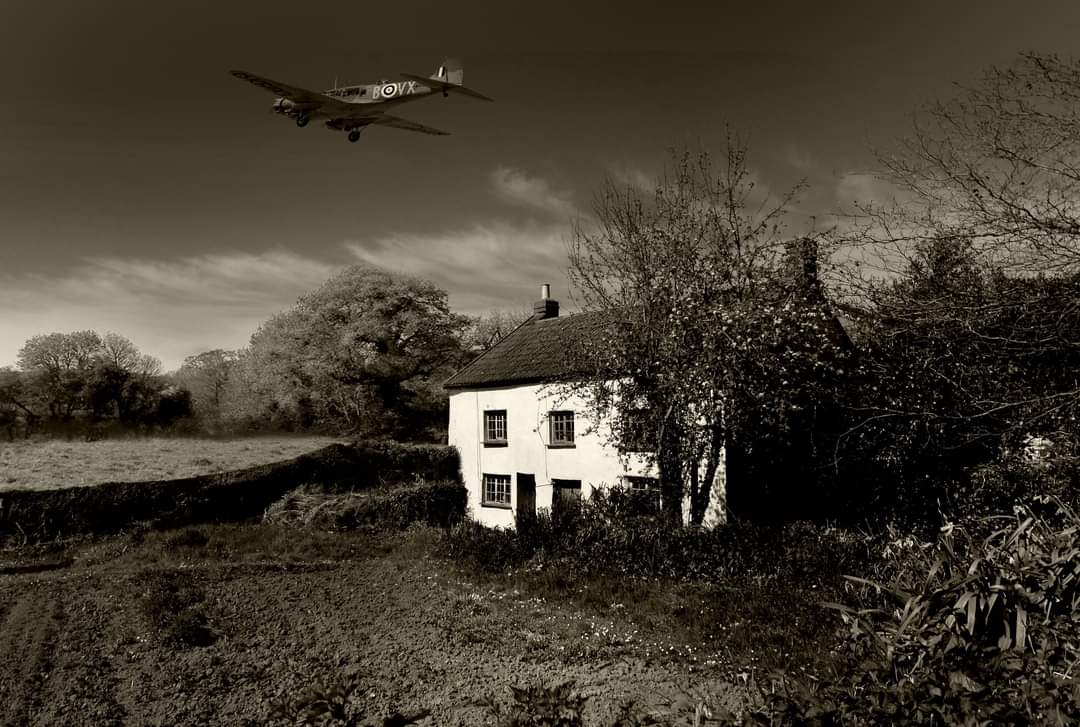


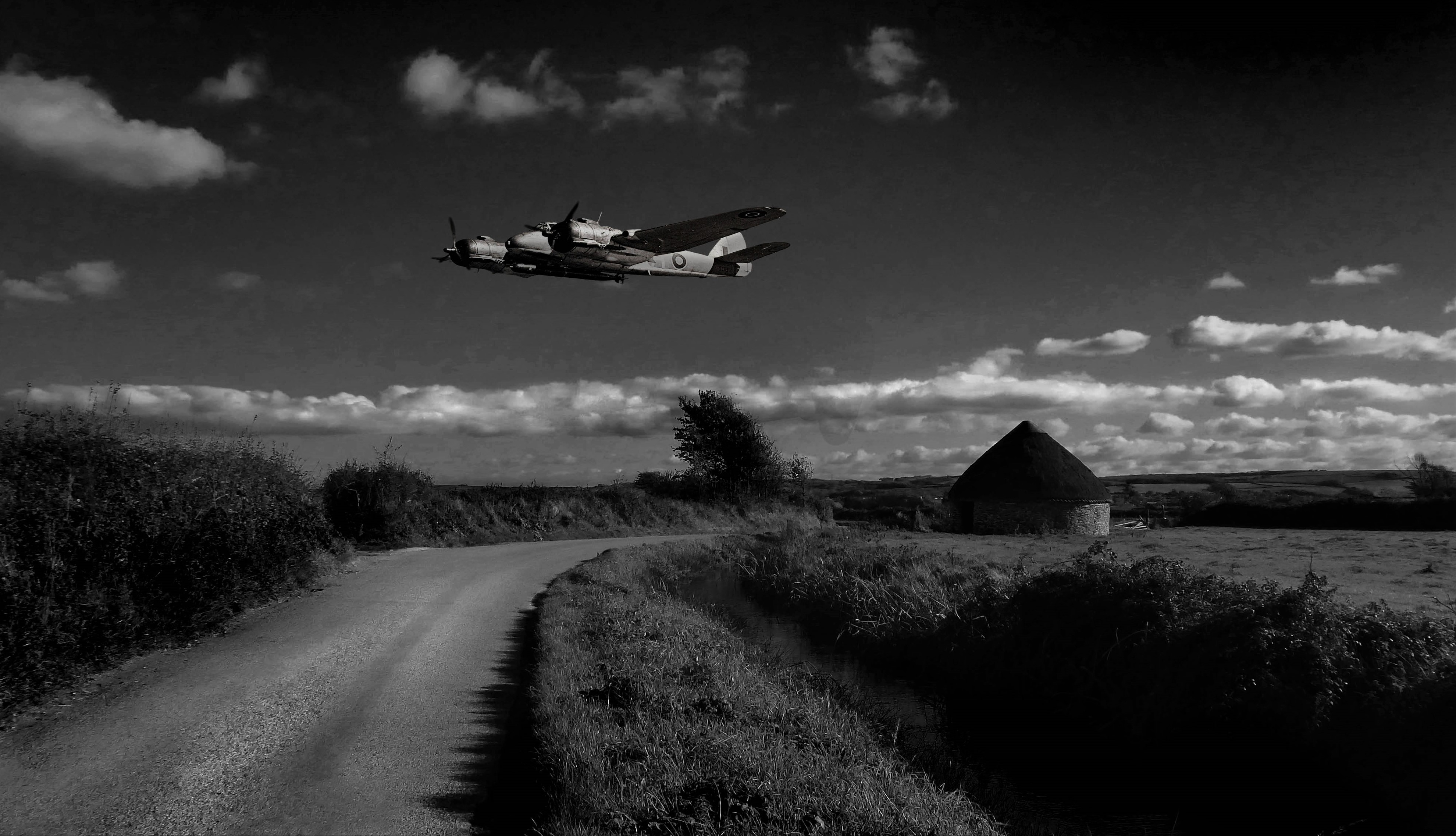


 Hawker Hurricane over the Linhay on the Marsh!
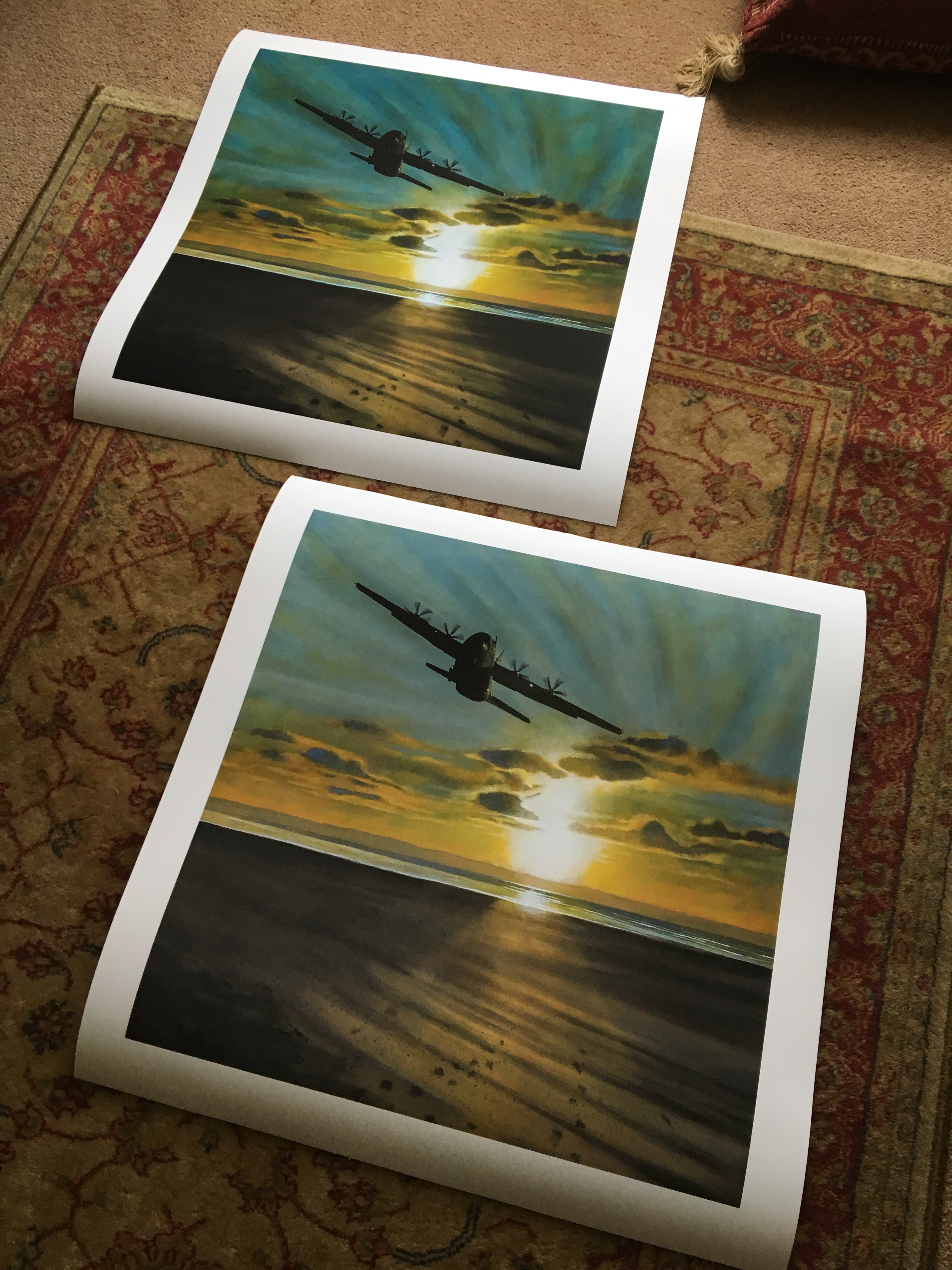 Many thanks to Adrian Beasley Imaging for these initial prints of one my paintings Hercules over Saunton, painted earlier in the year. Hercules practicing landing and take offs on Saunton Beach in North Devon.
 Another Bideford Black painting 610 x 350mm on Bockingford paper. This was from an idea by Adrian Beasley Imaging who suggested copying one of his landscape photographs for an upcoming joint exhibition at a local venue. We are both exhibiting black & white landscapes and a comparisonal piece will be interesting. Just a few minor adjustments in the cold light of day but this is it. See you on North Devon Art Trek. Al
 The original AB photographic image above and my afternoon’s work beneath. I’ve taped the outside so that when removed it gives a kind of photographic edge to my painting. Al
 Last Bideford Black painting for a while. This is of the famous Seafield House at Westward Ho in North Devon. Always love looking at this building with its decay and mystery. Recently a local businessman has purchased this so it will be interesting to see what happens.
  I’m very pleased to have a mention in The Gazette this week with regard to the North Devon Art Trek 2019. Please check out their site and see what North Devon has to offer. I was so pleased with last year’s open studio weeks that I shall be doing the same this year. Al
